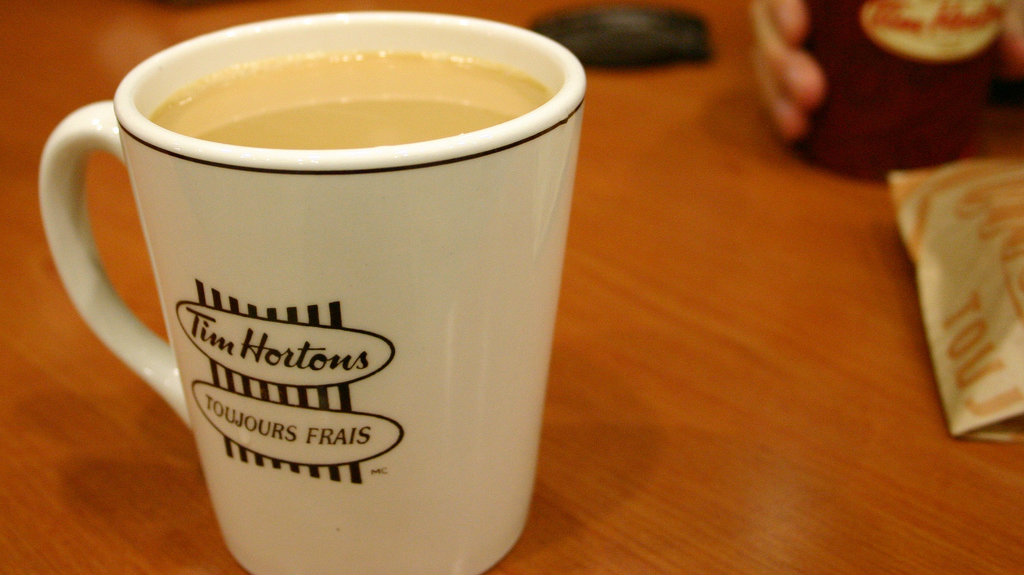
Recent polls results suggest that Tim Hortons is falling out of favour with Canadians. Has parent company Restaurant Brands International Inc. (TSX: QSR)(NYSE: QSR) and its corporate culture gone too far?
Last month, results were published from the annual Leger Poll, a survey of over 2,000 Canadians that aims to highlight the most popular brands in Canada.
As one of Canada’s truly iconic brands, Tim Hortons is a regular on the list, often making the top 10, as Canadians have long held the coffee chain close to their hearts; Tim Hortons was as much a part of Canadian culture as cold winters and ice hockey.
But this year the results were much, much different.
Not only did Tim Horton’s fall off the top 10 rankings in 2017, but the company’s reputation fell 46 places all the way down to number 50.
That was one of the worst reported drop-offs in the survey’s history — nearly as bad as Sears Canada, the subsidiary of Sears Holdings Corp. (NASDAQ:SHLD), which fell 61 spots; it made headlines for awarding executives year-end bonuses at the same time the company was closing stores and cutting employee pension benefits.
The falloff in Tim Hortons’s reputation this year was a attributed by experts to something a little different (but not all that much) to the reason for the decline in Sears rating.
Many are pointing to the way that Restaurant Brands, majority owned by Brazilian investment company 3G Capital, handled the increase to Ontario’s minimum wage this past winter.
Tim Hortons found itself in the news this winter, but not for reasons you’d want to see.
That’s because some of the company’s franchise owners in Kingston and Cobourg had told their workers that in response to the provinces mandatory increase in minimum wage for employees, the owners planned to eliminate staff paid breaks and make employees responsible for covering certain expenses out of pocket that had formerly been covered by the company, like dental and uniform costs.
The response by Canadian coffee drinkers was a backlash that spread across social media, including the “No Timmy Tuesdays” movement, which encouraged habitual coffee drinkers to get their Tuesday morning brew from one of the many upstart local independent cafes.
How can Timmy’s dig itself out of this hole?
The number two factor on the Leger Poll behind service is trust and transparency, and those who have studied the results in detail are suggesting this is where Tim Hortons lost most of its points.
Just like how Sears handled the issue of its employee pensions, it’s felt that Canadians didn’t take well to the way that Tim Hortons had managed its relations with employees.
Coffee drinkers will feel better when they know that those waking up at the crack of dawn to serve them are being paid a fair wage for their time.
Restaurant Brands, which already had a bit of a nasty reputation for pursuing aggressive cost-cutting initiatives designed solely to boost bottom-line profits, may want to take a step back and ask itself if a proactive approach to promoting a healthier employee culture makes the most sense long term, or whether it is better off putting the responsibility of owning the iconic coffee brand back into Canadian hands.
Stay Foolish.