It’s one of life’s greatest questions, wouldn’t you say? How much money do you really need to make to get the maximum Canada Pension Plan (CPP) payout? It’s a question more Canadians are asking as the cost of living continues to rise and long-term financial planning gets trickier. According to Scotiabank’s Q2 Worry Poll, 30% of Canadians don’t know how to make their money work best for them. Among younger generations, 48% of Gen Z and 49% of Millennials are struggling to balance wants and needs, with many even making concessions on basic needs to afford their lifestyle. That makes getting the most out of CPP more important than ever.
Source: Getty Images
What you’ll need
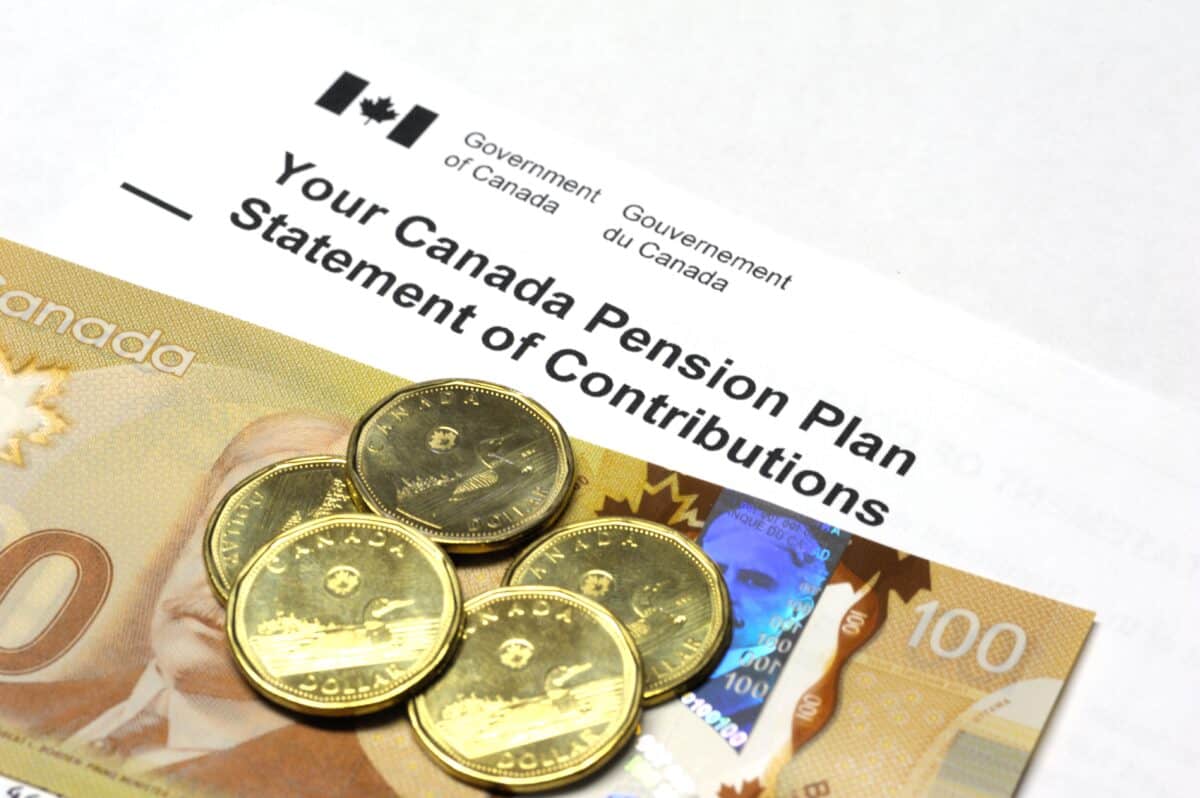
To qualify for the maximum CPP in 2025, you must contribute up to the Year’s Maximum Pensionable Earnings (YMPE) for at least 39 of the 47 years between ages 18 and 65. For 2025, that YMPE is $71,300. Your contributions stop once your earnings exceed that cap; any salary above $71,300 in a year doesn’t further increase your CPP entitlement. Keep in mind that it’s not just what you earn, but also whether you’ve contributed the maximum allowed each year. If you earned more than the cap, your contributions stop at that level, and any income above it doesn’t impact CPP.
So what’s the actual maximum monthly CPP payout in 2025? If you start at age 65, it’s $1,433.00 per month ($17,196 per year). But if you don’t contribute the YMPE for enough years, your payment will be substantially lower. The average new CPP retirement pension (April 2025) is $844.53 per month, illustrating how few reach the maximum. So, how do we boost it?
Invest in BN
This is why many investors are looking to supplement CPP with other income sources. One option that continues to stand out is Brookfield (TSX: BN). Brookfield just reported distributable earnings of US$1.5 billion for the first quarter of 2025, up 27% year over year. That translated to US$0.98 per share, reflecting strong growth in asset management, wealth solutions, and operating businesses. Fee-related earnings rose 26%, thanks to US$25 billion in new fund inflows. Brookfield now has US$165 billion in deployable capital.
The dividend stock also repurchased US$850 million in shares during the quarter, showing confidence in its valuation and long-term plan. Brookfield’s diversified business spanning renewable power, infrastructure, private equity, and real estate helps generate reliable cash flow. That’s the kind of financial engine which supports both share appreciation and potential dividend growth, which can be a key piece of any income strategy alongside CPP.
Considerations
Still, Brookfield isn’t a guaranteed income stream. It currently pays a small dividend of just $0.49 annually for a $0.58% yield. That’s not the main appeal. What investors really like is the dividend stock’s ability to reinvest earnings and grow over time. Brookfield aims to deliver 15% or higher annualized returns to shareholders, which is far above what CPP offers. Owning a stock like BN could help fill the gap between your CPP and the retirement income you actually need.
The reality is, most Canadians won’t hit that $71,300 salary consistently for 39 years. And even if they do, CPP alone likely won’t cover all retirement costs. That’s why a mix of government pensions, RRSPs, TFSAs, and investments like Brookfield shares can build a more complete retirement picture. Brookfield offers exposure to long-term assets and global opportunities that few other TSX companies can match.
Bottom line
In a world where inflation eats away at fixed income and younger Canadians are already making sacrifices to keep up, understanding how to maximize CPP and top it up with smart investments is essential. Whether you’re early in your career or nearing retirement, building a lifetime income plan with a mix of reliable sources can give you peace of mind. And that’s worth a lot more than just chasing the max CPP payout.