The energy market has always had its darlings, including oil majors, utilities, and, more recently, artificial intelligence (AI)-driven smart grid tech. But in the background, another sector has been gaining momentum: renewable infrastructure, especially companies that build and operate offshore wind farms, battery storage, and hybrid energy systems. It’s not as flashy as AI or as politically noisy as oil, but it’s crucial. And Canadian investors have a TSX-listed player that’s quietly delivering real results: Northland Power (TSX:NPI).
Source: Getty Images
About NPI
Northland Power might not be a household name, but with $1.1 billion in liquidity, major global projects under development, and a track record of getting things done early and under budget, it has earned its place in the conversation. The company’s first-quarter 2025 results show why some of the savviest investors are turning their attention toward this clean energy giant.
Let’s get the elephant in the room out of the way first: Q1 results weren’t spectacular on the surface. Revenue fell to $649 million from $755 million a year earlier, net income dropped to $111 million from $149 million, and adjusted earnings before interest, taxes, depreciation and amortization (EBITDA) came in at $361 million, down 20% year over year. That’s mostly because Europe saw the lowest wind conditions in a decade, slashing production at Northland’s offshore facilities. It was a weather event, not a business misstep.
And despite that, the dividend stock still generated $157 million in free cash flow, paid out $0.30 per share in dividends, and had a 95% commercial availability rate across its portfolio. In other words, even in a tough quarter, Northland’s diversified model held steady.
Earnings on the way
What’s driving interest now is the dividend stock’s progress on major projects that could transform its financial profile in the next few years. The 250 MW Oneida battery storage project, Canada’s largest, is now up and running, ahead of schedule and under budget. It will operate under a 20-year contract with Ontario’s grid operator.
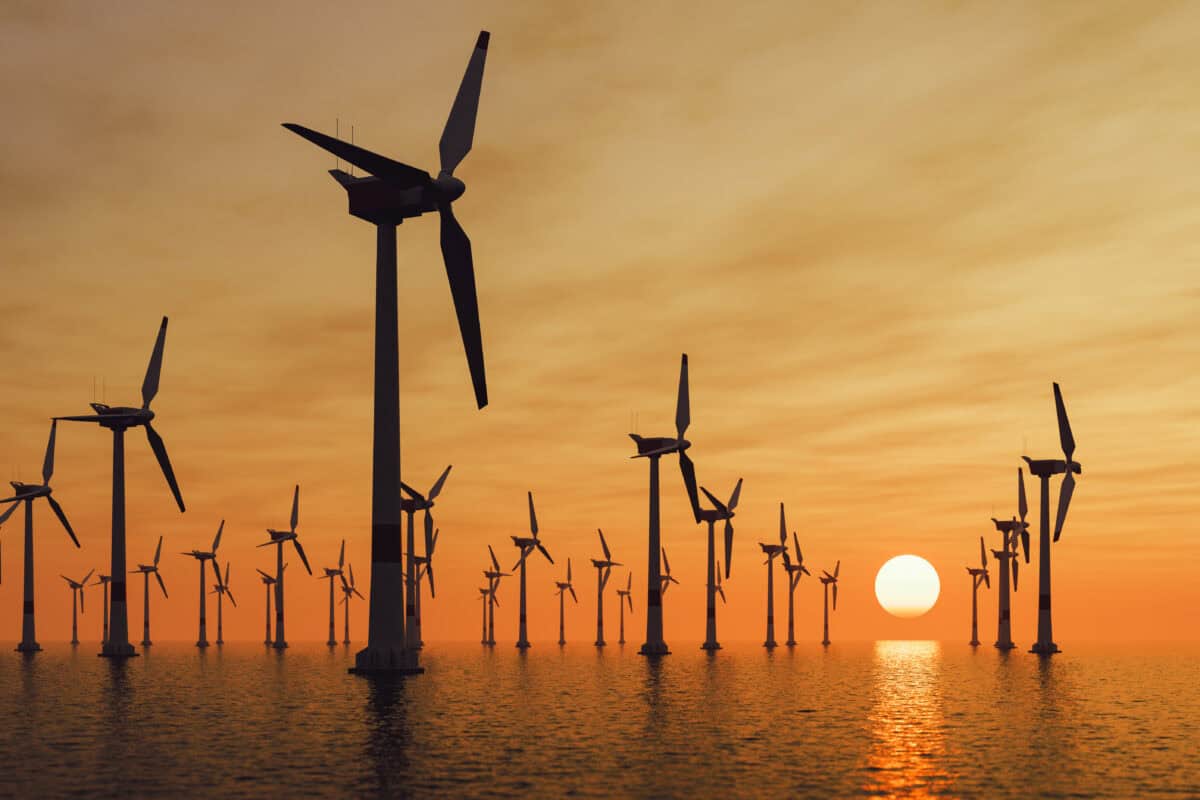
Then there’s Baltic Power and Hai Long, two massive offshore wind farms in Poland and Taiwan. Baltic Power is expected to reach commercial operations in late 2026. Hai Long, which successfully installed its first turbine this quarter, will come online in stages through 2027. Together, these projects represent over two gigawatts of capacity, and both are progressing in line with cost estimates, a rare feat in this inflationary environment.
There’s also the Jurassic Battery Energy Storage System in Alberta, a $120 million project that just closed debt financing and is gearing up for construction. It’s expected to begin operating in 2026, again with firm revenue visibility once it’s online.
Looking ahead
Northland’s leadership team has been refreshed, too. Christine Healy took the reins as CEO earlier this year, and Jeff Hart joined as CFO in May. This kind of management turnover might usually cause concern, but in this case, the transition appears to be adding focus. The dividend stock is doubling down on execution and diversification. As Healy put it, “Our diversified portfolio and an experienced executive leadership team provide Northland an opportunity to capture the accelerating demand for electricity and energy security.”
So why is this sector still overlooked? In part, it’s because renewables infrastructure doesn’t deliver overnight wins. Projects take years to build, weather can skew quarterly numbers, and earnings growth comes in waves. But for long-term investors, the trade-off is reliable income, inflation protection, and a growth pipeline that’s aligned with global climate and energy security goals.
In fact, management reaffirmed its 2025 guidance for $1.3 to $1.4 billion in adjusted EBITDA and free cash flow per share between $1.30 and $1.50. That means even after a difficult quarter, Northland still expects solid annual results. At a recent price around $23, the stock offers a dividend yield over 5%, not bad for a company expanding into global energy mega projects. In fact, a $7,000 investment could bring in $364 every year, or $30 every month!
| COMPANY | RECENT PRICE | NUMBER OF SHARES | DIVIDEND | TOTAL PAYOUT | FREQUENCY | TOTAL INVESTMENT |
|---|---|---|---|---|---|---|
| NPI.TO | $23.00 | 304 | $1.20 | $364.80 | Monthly | $6,992.00 |
Bottom line
If you’re looking for a sector with long-term tailwinds, stable dividends, and room for valuation growth, renewable infrastructure deserves a spot on your radar. Northland Power may not be the flashiest stock on the TSX, but it’s building the kind of business that can thrive through market cycles, and that’s something smart investors are quietly buying into.