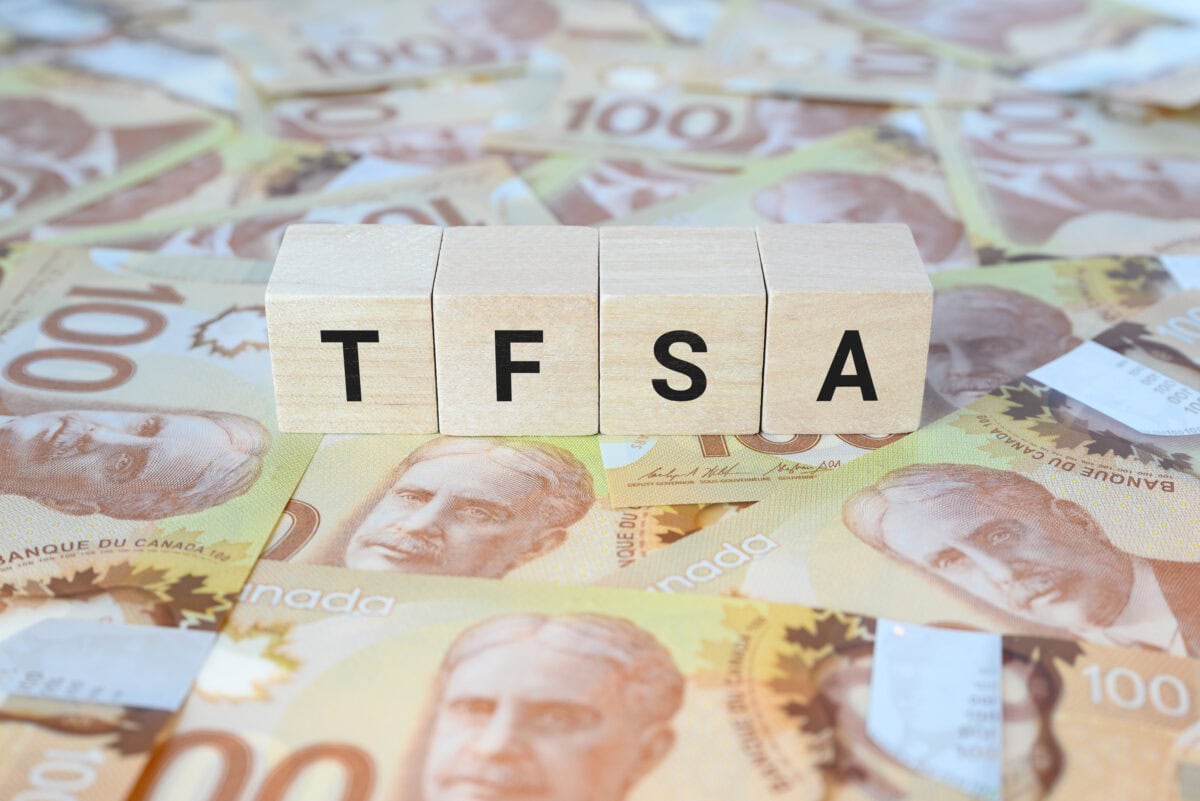
Millions of Canadians are missing out on one of the most powerful wealth-building tools available: the Tax-Free Savings Account (TFSA). Despite being introduced over a decade ago, the TFSA remains widely underutilized. In 2024, 45% of TFSA holders didn’t contribute at all, and 91% failed to maximize their contributions, according to Statistics Canada.
This isn’t just a missed opportunity — it could be the difference between a modest retirement and one with real financial freedom.
Source: Getty Images
Your TFSA is more than just a “savings” account
Too many Canadians treat the TFSA like a basic savings account, using it only for cash or low-yield Guaranteed Investment Certificates (GICs). While there’s nothing wrong with being conservative — especially with short-term goals — you’re barely scratching the surface of what this account can do.
A TFSA can hold a wide range of investments: stocks, bonds, exchange-traded funds (ETFs), mutual funds, and even certain private company shares. How you choose to invest within your TFSA will determine both your returns and your exposure to risk.
Let’s look at two extremes. A GIC with a 2.85% interest rate turns a $7,000 deposit into $7,199.50 after one year. Is it safe? Yes. Is it exciting or transformative? Not so much.
A $7,000 TFSA plan for long-term growth
Now, here’s a strategy that could actually transform your retirement — and it’s surprisingly simple.
Consider investing your $7,000 TFSA contribution into iShares Core Equity ETF Portfolio (TSX: XEQT). This all-in-one ETF offers 100% equity exposure across a globally diversified portfolio:
- 43% in the United States
- 25% in Canada
- 6% in Japan
- 3.7% in the United Kingdom
- 2.4% in France
- 2.3% each in Germany and Switzerland
- 2% in Australia
- 1.5% in China
- 1.1% in the Netherlands
XEQT is designed for long-term growth. Since its inception in 2019, it has achieved a compound annual growth rate (CAGR) of 12.75%, with a recent five-year return of 13.64%. It also pays a 3% distribution yield, and the management expense ratio (MER) is a low 0.20% — a small price for automatic diversification and rebalancing.
Building wealth automatically
If you use a commission-free platform like Wealthsimple, you can easily dollar-cost average your investment by contributing about $583/month, buying more units when prices are low and fewer when they’re high. This approach smooths out volatility and removes emotion from your decision-making.
Do you prefer to use a platform that charges commissions? You can consider reducing costs by making fewer purchases throughout the year.
Let’s assume a more conservative 10% annual return on a $7,000 yearly contribution. Here’s what your TFSA would look like:
- 10 years: $111,562
- 20 years: $400,925
- 30 years: $1,151,458!
And remember — every dollar of that growth is tax-free when withdrawn from your TFSA.
The investor takeaway
This isn’t just theory — it’s a blueprint. While no investment is guaranteed, consistently investing your $7,000 TFSA contribution in a growth-oriented ETF like XEQT could set you up for a far more comfortable retirement.
Even better? You don’t need to be a stock-picking expert to make it work.
So, what’s stopping you from turning your TFSA into a million-dollar tax-free machine?