Over the past 10 years, Pembina Pipeline (TSX:PPL) has earned solid total returns for shareholders. Its stock has delivered a 130% total return (including dividends) over the decade. That is an 8.5% compounded annual growth rate (CAGR) for PPL stock in that time.
However, recently Pembina’s stock has underperformed the market and its pipeline peers. Year-to-date, Pembina’s stock is down 1%. That is compared to Enbridge and TC Energy, which are up, respectively, 9.8% and 7.2% this year.
Source: Getty Images
What does Pembina Pipeline do?
Pembina has a market cap of $30 billion and enterprise value of $45 billion (which gives you an idea of how much debt it has). The company operates a diversified energy infrastructure business in Western Canada. It is a major player in the natural gas processing value chain for Canadian energy producers.
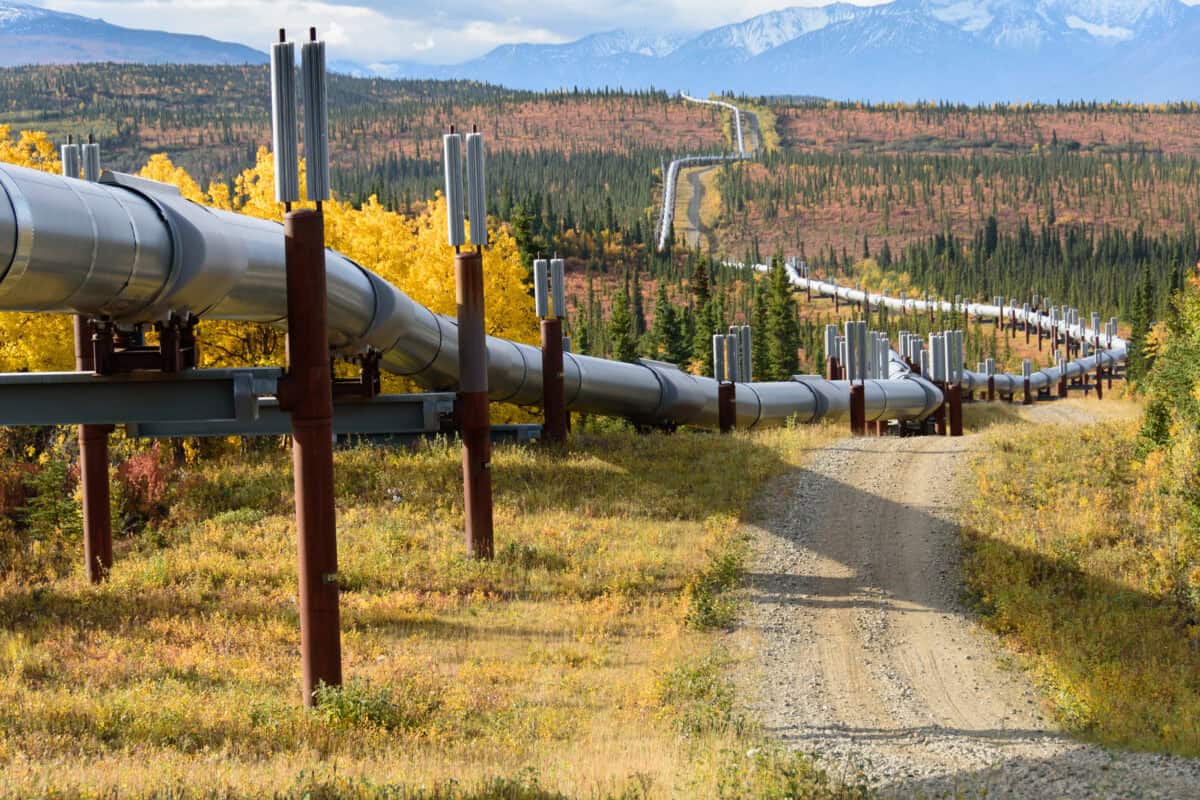
Pembina Pipeline has a collection of pipelines, processing and fractionation facilities, storage, propane export terminals, and transmission pipelines. It is strategically positioned in the Western Canadian basin to offer energy producers the quickest, most efficient, and often most affordable way to get their product to market.
Why is the stock down in 2025?
Pembina has some great assets. However, its stock has come under pressure in 2025. It had to re-contract its Canadian portion of the Alliance Pipeline. The bad news is that it had to adjust overall contracted rates lower and provide several concessions. The good news is that it could have been much worse.
This will have a near-term impact on earnings for the rest of the year. Yet, it does mean Alliance Pipeline will have a firm contract in place for the next 10 years. So, the future is clearer for that specific asset.
What do the next five years look like for Pembina Pipeline?
So, what is the outlook for Pembina Pipeline from here? Currently, it has $4 billion of capital projects underway. That includes its widely anticipated Cedar LNG export terminal in Kitimat, BC. Cedar LNG is one of only a few LNG export terminals that is currently approved and in construction.
The prospects for moving liquified natural gas to higher priced Asian markets is highly attractive to energy producers. The asset has already experienced considerable interest for contracting. If it can execute the construction on time and on budget, it could be a significant homerun for Pembina. It expects to complete the project in late 2028.
Right now, Pembina Pipeline targets 4–6% compounded annual growth in its fee-based income all the way to the end of 2026. Advancements in additional project prospects (like additional pipeline expansions and data centre power projects) could expand its mid-single digit growth outlook to the end of the decade.
Pembina has a strong balance sheet. In fact, it has the lowest leverage amongst its pipeline peers. Consequently, it should be able to fuel its growth plans without any shareholder dilution. Its franchises generate strong free cash flows. As its $4 billion project funnel comes to completion, the company will generate attractive excess cash.
The Foolish takeaway
Pembina Pipeline’s stock is beaten down in 2025. PPL is trading close to its lowest valuation in five years. It also happens to pay an attractive 5.4% dividend. Investors are likely to enjoy 4–6% capital appreciation and that nice dividend for the coming five years. That puts you at a 9–11% total annualized return. Not bad for a stable, steady, utility-like business.