Why This Canadian Stock Is Perfect for a Boom in Public Spending

Aecon Group is one of Canada’s largest construction and infrastructure companies, and it’s posting record backlog amidst strong demand.

Key Points
  • • Aecon Group (TSX:ARE) is positioned to capitalize on Canada's massive infrastructure spending boom, with the Parliamentary Budget Office projecting $159 billion in government infrastructure investments over five years while Aecon maintains a record $10.7 billion backlog and generated $4.2 billion in 2024 revenue.
  • • Despite recent profitability challenges from pandemic-era project disruptions, the company delivered strong 31% revenue growth last quarter driven by nuclear, civil, and utilities spending, while management focuses on risk mitigation through partnerships and recurring revenue streams to improve margins as legacy projects complete.
  • 5 stocks our experts like better than Aecon

Aecon Group (TSX: ARE) is one of Canada’s largest publicly traded construction and infrastructure development companies. The company generated $4.2 billion in revenue in 2024 and its current backlog is at record levels of $10.7 billion.

Let’s take a look at why I think that this Canadian stock is the one to buy for exposure to increased public spending.
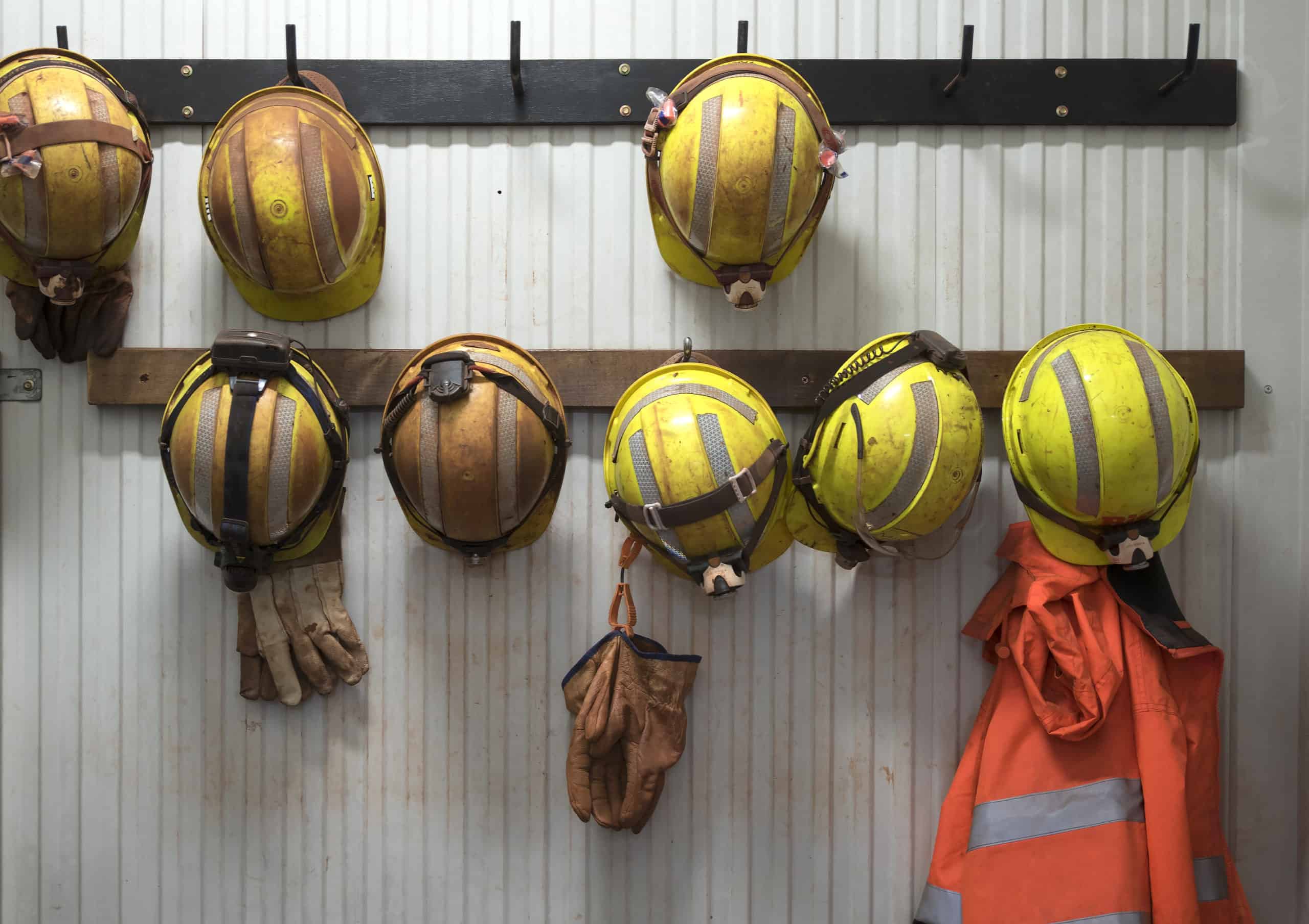
Safety helmets and gloves hang from a rack on a mining site.

Source: Getty Images

Infrastructure spending is booming

Before I get into the specifics on Aecon, I would like to review government spending plans.

The Parliamentary Budget Office (PBO) estimates that the Government of Canada will spend $159 billion on infrastructure in the next five years. The areas of focus are the same as they have been, but they bear repeating. They include investments in public transit, renewable energy, communities and housing, trade and transportation, and rural and northern communities.

This spending boom is a big part of what’s driving Aecon’s growth and with the investments still underway, it will continue to drive growth in the future. Aecon’s stock price has already been reflecting this positive infrastructure spending environment. As you can see from the graph below, the stock has rallied 74% in the last five years.

Aecon’s results are also booming

In Aecon’s latest quarter, the impact of all of this spending was evident. Adjusted revenue came in at $1.3 billion, 31% higher than the same period last year. This was driven by strength in nuclear spending in Ontario and the US, as well as strength in civil spending, which includes road building and mass transit spending. Finally, it was driven by spending on utilities and gas distribution infrastructure.

While Aecon’s bottom line results were less than impressive, with earnings per share (EPS) coming in at a loss of $0.09, there is light at the end of the tunnel for the company’s profitability. Management’s focus remains on improving profitability.

In the last five years, Aecon’s business has benefitted from all of these positive trends. And this is reflected in the company’s financial results. For example, revenue increased 16.4% to $4.2 billion in this time period and its net income increased 122% to $161.9 million. Also, Aecon’s backlog is at record levels.

Focus on risk and profitability

Before I close off, I would like to review Aecon’s bottom-line performance – a net loss. Cost overruns and challenges on pandemic-era projects are to blame. This will no longer be an issue as these projects reach full completion. Aecon’s new way of doing things is all about minimizing the risks and maximizing profitability. For example, the company has a strong recurring revenue base and has taken a lot of the risk out of its projects by entering into partnerships, so as to limit its debt load.

The bottom line

Aecon is the Canadian stock to own today to benefit from the infrastructure spending boom. This boom reflects the significant amount of infrastructure investment underway in North America. The current infrastructure is simply old and in need of replacement and/or updating. Also, the transition to a net zero economy is necessitating significant investments in order to build out the infrastructure to support this transition.

Fool contributor Karen Thomas has a position in Aecon. The Motley Fool has no position in any of the stocks mentioned. The Motley Fool has a disclosure policy.

More on Investing

A meter measures energy use.
Energy Stocks

Rates Are Rising Again: Is Emera Still a Sensible Retirement Stock?

Emera still offers retirement income, but borrowing costs and per-share earnings decide how comfortably that payment can grow.

Read more »

ETFs can contain investments such as stocks
Dividend Stocks

How to Use a TFSA to Generate $200 in Monthly Tax-Free Income

Use a TFSA to build $200 in monthly tax-free income with XEI and ZRE. See how these ETFs work and…

Read more »

Business success of growth metaverse finance and investment profit graph concept or development analysis progress chart on financial market achievement strategy background with increase hand diagram
Dividend Stocks

Smart Ways to Invest Extra Income and Say Goodbye to Financial Stress

Canadians have ways to make their extra income work as hard as they do and say goodbye to financial stress.

Read more »

how to save money
Energy Stocks

How Much Would You Need to Invest in Enbridge to Average $200 a Month?

Enbridge’s current dividend needs roughly $42,600 in shares to average $200 monthly, with payments arriving every quarter.

Read more »

Two seniors walk in the forest
Dividend Stocks

Sun Life Stock Pays 3.3%: How Much to Invest for $100 a Month in Dividends

Sun Life Financial (TSX:SLF) might be a massive bargain after Thursday's vicious plunge as stock markets sold off hard.

Read more »

TFSA (Tax free savings account) acronym on wooden cubes on the background of stacks of coins
Dividend Stocks

How to Turn Your TFSA Into $1,000 a Month in Tax-Free Income

Build toward $1,000 a month in tax-free income with a TFSA. See how Enbridge, Scotiabank and ZWC could help, and…

Read more »

customer fills up car with gasoline
Dividend Stocks

How Much Emergency Money Do Canadians Actually Need?

A safety fund equivalent to 3 to 6 months of living expenses is generally the baseline buffer that Canadians would…

Read more »

Piggy bank in autumn leaves
Bank Stocks

Rates Are Rising Again, So Are GICs and High-Interest Savings ETFs Even Worth It?

The Bank of Canada hiked rates to 2.50%. See what a GIC or the Purpose savings ETF earns on $10,000…

Read more »