A dividend yield exceeding 7% immediately commands attention from income-focused investors. Why? The high yield could easily double an investor’s capital in under a decade, simply through dividend reinvestment, according to the simple Rule of 72. Such yield offerings usually indicate high risks of dividend cuts. But for South Bow (TSX: SOBO), the pure-play liquids pipelines company spun off from TC Energy (TSX: TRP) in 2024, its quarterly dividend payout promises a reliable stream of high-yield passive income that could subsist for decades to come.
With a quarterly dividend of US$0.50 per share that yields 7.2% at current exchange rates, and a long-established pipelines business built on mission-critical energy infrastructure, South Bow stock is a top-notch TSX dividend stock to consider buying in bulk in 2026.
Source: Getty Images
South Bow stock’s 7.2% dividend proposition
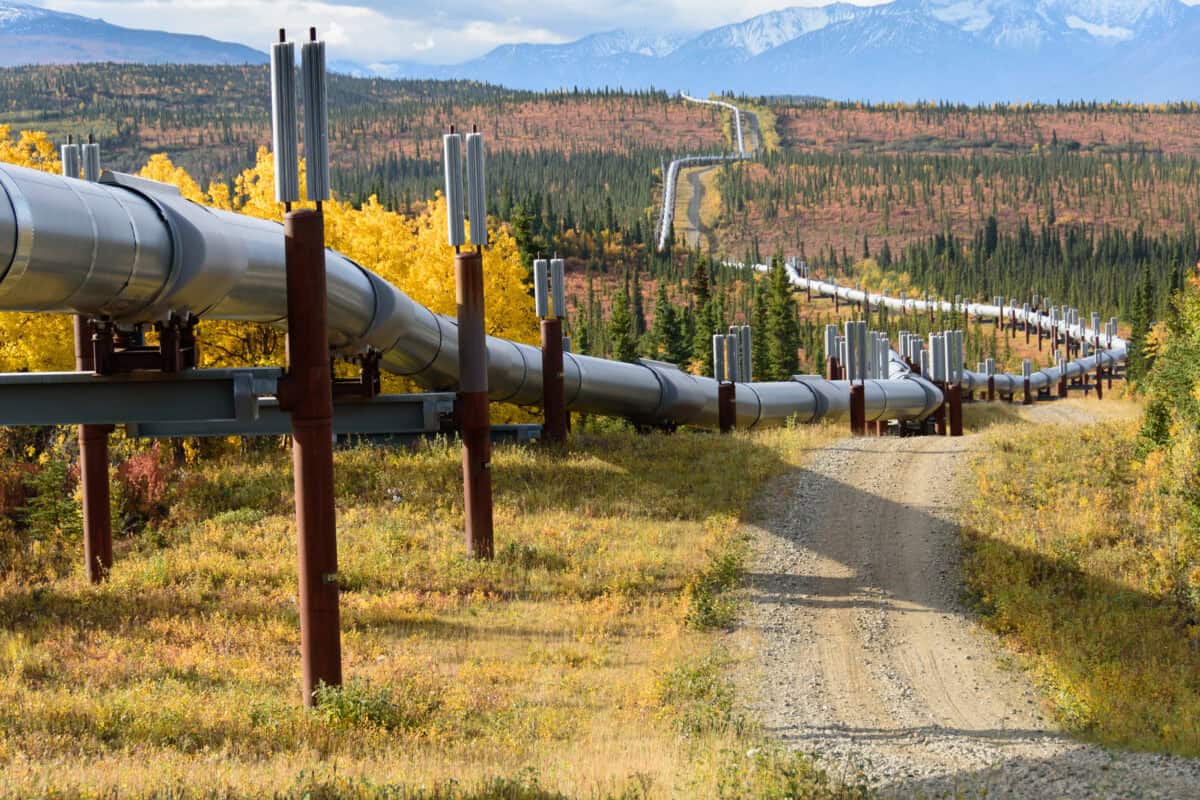
At its core, South Bow is a toll-road for Canadian crude oil. Its 4,900 kilometre crude oil pipeline infrastructure is an irreplaceable asset, connecting Western Canada’s oil to major refining hubs in the United States Midwest and the Gulf Coast. This strategic positioning generates moats, and stable, fee-based cash flows that are the lifeblood of a reliable high-yield dividend.
About 90% of South Bow’s earnings are contracted and insulated from short-term market volatility. And there’s much more security for the dividend than meets the eye.
The solid foundation: Rock-solid cash flow coverage
The most critical test for any high-yield stock is dividend sustainability. While a superficial look at earnings might raise concerns with an earnings payout rate exceeding 125%, falsely flagging the yield as unsustainable, the opposite is actually true. Earnings are distorted by massive non-cash charges including depreciation and amortization, and accounting profits definitely won’t reflect a pipeline’s true potential to pay recurring dividends to shareholders.
A true measure for a pipeline giant is Distributable Cash Flow (DCF) – the actual cash generated from operations that’s available to pay shareholders, after accounting for maintenance costs. South Bow’s dividend is well covered by its distributable cash flow.
Management guides for South Bow to generate about US$655 million in distributable cash flow in 2026. The dividend may cost about US$415 million. This gives us distributable cash flow payout rates in ranges between 63% and 78%, a comfortable range that indicates the high-yield dividend payout is well covered by recurring cash flow. This contrasts sharply with a misleading earnings-based payout ratio inflated by non-cash accounting charges.
South Bow’s financial strategy fortifying dividend support
South Bow’s disciplined capital allocation strategy directly reinforces its long-term dividend outlook. Management has a clear, accelerated plan to strengthen the South Bow’s balance sheet, targeting a reduction in net debt-to-EBITDA (earnings before interest, taxes, depreciation and amortization) leverage to approximately 4 times over the long term. This deleveraging mission is a dividend protector in two key ways.
Firstly, deleveraging defends South Bow’s credit rating. Achieving this target secures South Bow’s investment-grade credit rating, ensuring lower borrowing costs and financial stability.
Secondly, deleveraging unlocks future financial flexibility. A stronger balance sheet provides the resilience to maintain the dividend through economic cycles and creates future capacity to fund growth through capital investments, or enhance shareholder returns through dividend raises and share repurchases.
An encouraging outlook for South Bow
Looking ahead, two near-term catalysts solidify the “buy the South Bow high-yield dividend” thesis. Firstly, the Blackrod Project, a key growth project, is on schedule for early 2026 completion at a cost of US$10 million. It will connect new production and provide an immediate boost to cash flow.
Secondly, industry forecasts point to renewed pipeline constraints in Western Canada by 2027, which should increase demand and pricing power for South Bow’s existing network.
Investor takeaway
South Bow stock isn’t a speculative yield trap, but a toll-road for North American energy with approximately 90% of its cash flow secured by long-term contracts. This model generates the stable, fee-based DCF that should directly fund its attractive dividend potentially for decades to come.
The 7.2% dividend yield is supported by a sustainable cash flow payout ratio, a management team committed to disciplined debt reduction, and visible growth in cash flow from new projects. I would buy this top-notch dividend stock in bulk.