One often confuses retirement planning with having a million-dollar portfolio. Can this one figure define a complex retirement plan? Each person has different financial needs, tax baskets, and investments. Only you or your financial advisor can tell what amount is right to retire. In this article, we will focus only on the Tax-Free Savings Account (TFSA) balance and how to determine the right balance for yourself.
Source: Getty Images
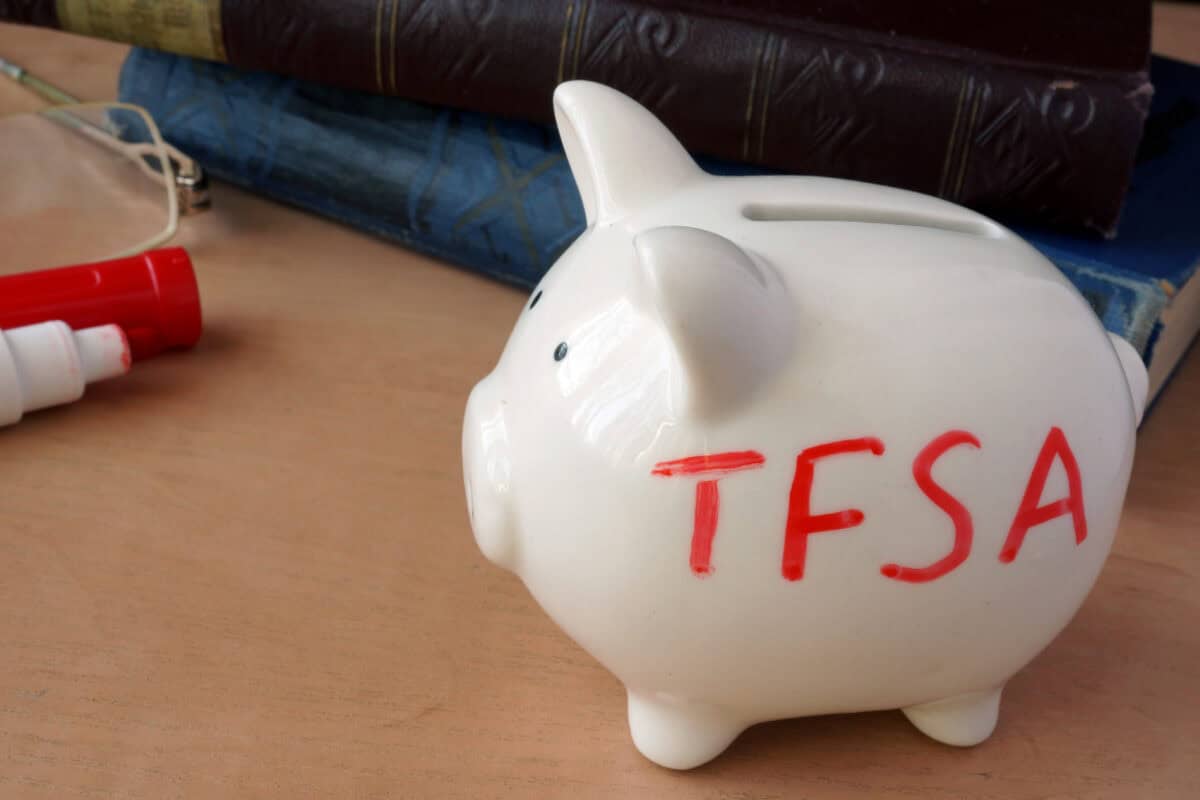
The role of a TFSA in retirement planning
Retirement planning is divided into two phases:
- Investing for retirement is where you accumulate wealth by investing in high-growth assets like stocks, ETFs, and mutual funds. The TFSA is a great tool for this stage as it allows your investment to grow and be withdrawn tax-free.
- Investing in retirement is the distribution phase, where you shift your asset allocation to income-generating assets that can give you inflation-adjusted passive income. A Registered Retirement Savings Plan (RRSP) is a great tool for that, as your withdrawals are taxable. You don’t want to withdraw when you are in a high tax bracket and let the CRA take a big bite from your compounded investment.
But this doesn’t mean you stop investing in a TFSA after you retire. Unlike an RRSP, which ceases to exist in the year you turn 71, you can continue to invest and withdraw from a TFSA as long as you live. In fact, the TFSA withdrawals are not added to your taxable income and therefore do not affect your Old Age Security (OAS) payments.
You could consider accumulating TFSA wealth to fill in the gaps in your retirement planning, as your emergency and recreational fund.
How much money do you need in your TFSA to retire?
If you turned 18 in 2009, your cumulative TFSA contribution room is $109,000. Had you maxed out on your TFSA contribution every single year and earned an average 8% return, your TFSA portfolio would be $212,000 in 2026, when you turn 35.
Assuming the Canada Revenue Agency (CRA) increases the TFSA contribution limit by $500 every four years, your cumulative TFSA contribution at age 60 could be $326,000. If your TFSA portfolio continues to earn an 8% average annual return, your TFSA balance could be $2.1 million by age 60. That’s the power of compounding.
| Age | Year | Annual Contribution Limit | Cumulative Total Limit | 8% Average Annual Return | Total TFSA Balance |
| 60 | 2051 | $10,000 | $326,000 | $2,090,351 | $2,100,351 |
| 59 | 2050 | $10,000 | $316,000 | $1,925,510 | $1,935,510 |
| 58 | 2049 | $10,000 | $306,000 | $1,772,880 | $1,782,880 |
| Continued | |||||
| 48 | 2039 | $8,500 | $221,000 | $754,747 | $763,247 |
| 47 | 2038 | $8,500 | $212,000 | $690,340 | $698,840 |
| 46 | 2037 | $8,500 | $203,500 | $630,704 | $639,204 |
| Continued | |||||
| 35 | 2026 | $7,000 | $109,000 | $212,045.62 | $219,045.62 |
| 34 | 2025 | $7,000 | $102,000 | $189,338.54 | $196,338.54 |
| 33 | 2024 | $7,000 | $95,000 | $168,313.46 | $175,313.46 |
| Continued | |||||
| 20 | 2011 | $5,000 | $15,000 | $11,232.00 | $16,232.00 |
| 19 | 2010 | $5,000 | $10,000 | $5,400.00 | $10,400.00 |
| 18 | 2009 | $5,000 | $5,000 |
This is an ideal scenario. But life has different plans. You will withdraw from a TFSA in your lifetime for various financial goals. Thankfully, the CRA adds back the withdrawals to your TFSA contribution room on January 1 each year.
You could also build a portfolio that may give you a 20% return, especially if you invest in the iShares NASDAQ 100 Index ETF (CAD-Hedged) (TSX: XQQ). This ETF can give you exposure to the hyper growth of the tech sector while mitigating risk by diversifying across the supply chain. Windfall gains in one segment could make up for bear markets in another. Discounting all these factors, even a portfolio growing at a compounded annual rate of 8% can give you $2 million in tax-free wealth.
Is a $2 million TFSA balance enough to retire?
$2 million may look big for now, but 25 years is a long time, and it is difficult to tell how inflation will grow. The CRA will give Canada Pension Plan (CPP) and OAS payouts, which could cover at least 50% of your necessities. RRSP, CPP, OAS, and any other employment pension will make up the majority of your retirement passive income.
TFSA only needs to cover your emergency fund, recreation costs, and gaps in retirement income. A 4% withdrawal rule could help determine if $2 million is sufficient to retire. If you withdraw 4% every year from a $2 million portfolio, it comes to $80,000 annually. Plan your retirement accordingly.