Starting savings early in life will determine your financial future. A good start compounded for years can give you the returns to achieve financial goals without accumulating debt. If we take 25 as the age to start serious savings, you will have to accelerate savings for the next four to five years. Because an average Canadian in the 25–29 age group had a Tax-Free Savings Account (TFSA) balance of $13,967 in the 2024 tax year. Canadians under 35 had an average Registered Retirement Savings Plan (RRSP) balance of $15,000.
This average is not even close to what you really need. Because if we look at the older generation who have been saving up for retirement, they have ambitious retirement goals, which they believe they can’t achieve. According to BMO’s Annual Retirement Survey, Canadians believe they need $1.7 million to retire, but 36% believe they may not achieve this goal.
Source: Getty Images
Don’t let fear of missing out stop you from saving
Why are we talking about retirement at age 25? To give you a reality check of the mistakes most older Canadians made. Had they started investing early in life at age 25, a $1.7 million retirement portfolio, along with other financial goals, could be a reality.
You can learn from their mistakes and make investing a routine early in life. From all the income you earn, set aside 5% for savings. If in a particular month you miss out on saving, consider making up for it next month. Consider that 5% as an expense you have to pay.
If you are not comfortable doing the 5% math, set a fixed amount that you know you can easily commit to every month. It can be $100, $200, or $500. Forget about the $1 million goal, as that will only lead to procrastination. Just focus on the next step. Taking one step at a time helps cover miles.
Suppose you start saving $100 every month and successfully save for 12 months, you can challenge yourself and save $150. Your TFSA has the contribution room for $500 per month in savings, and $1,000 more. Keep increasing your savings by $50 or $100 as your income grows.
Where to put your TFSA savings?
A TD Bank survey found that many millennials and Gen Zs use a TFSA as a normal savings account. Instead of investing their money in stocks, they keep it idle as they want to use it in the next few months. Some even state that they have not saved enough to invest.
It is true that one should first build an emergency fund before investing, and only invest in stocks the amount they are willing to lose. A smart strategy will be to build an emergency fund and an investment portfolio simultaneously. Emergencies will keep coming. In the process of filling the emergency bucket, which has an open tap at the bottom, you will never get out of the firefighting zone.
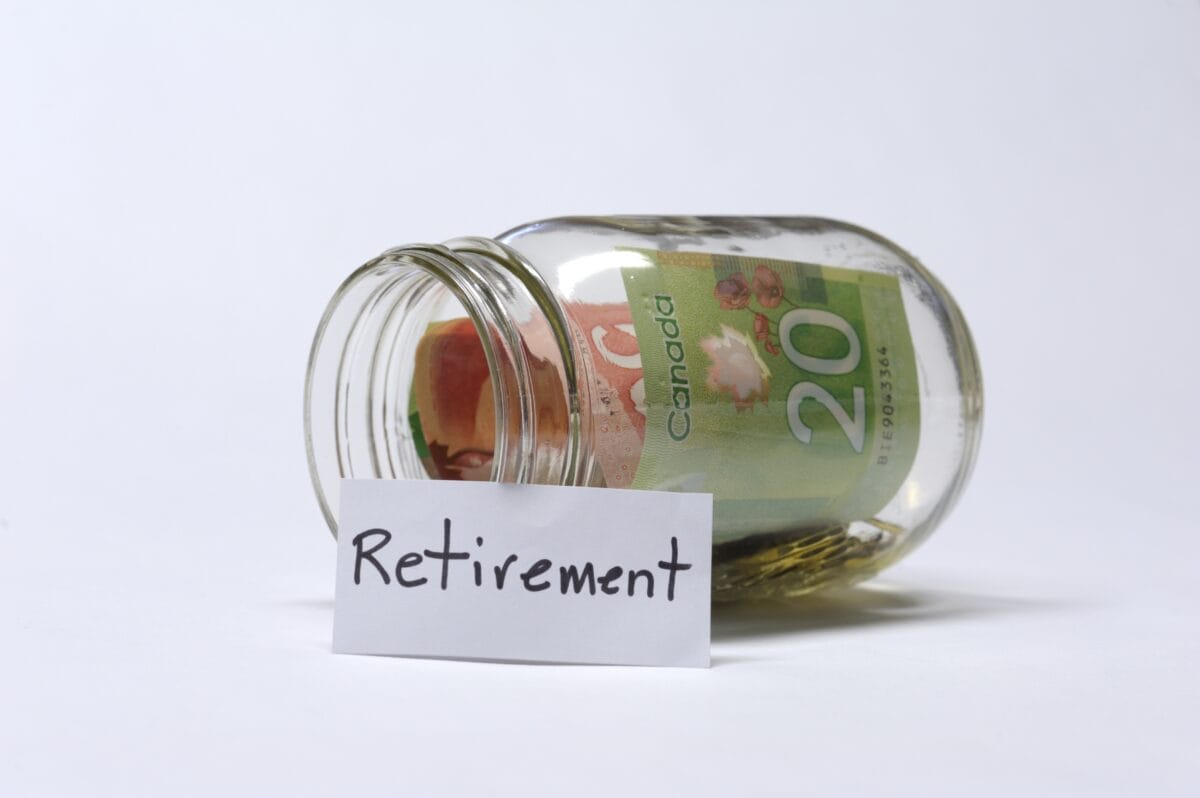
Here, the savings jar technique helps. Considering $100 per month as an expense is as good as investing the money you are willing to lose. A lot can happen with $100. Since your life doesn’t depend on this $100, you can invest it in high-risk, high-return stocks like Ballard Power Systems (TSX: BLDP).
A TFSA stock ideal for 25-year-old Canadians
Martin Neese became the chief executive officer (CEO) of Ballard in July 2025 and has cut operating expenses by 40% in his tenure. He recently made one of the biggest strategic moves for Ballard. The problem with adopting hydrogen fuel cells was that clients didn’t have access to hydrogen. Thus, Ballard acquired hydrogen fuel company GeoPura for $515 million in a cash-stock deal. Ballard will pay $154 million in cash and the remaining in shares, giving GeoPura a 14.4% stake in the combined company.
This will help Ballard offer both hydrogen fuel and fuel cells, expanding its addressable market. GeoPura will also bring its supply deals with Microsoft, Walt Disney, Netflix, and the U.K. Ministry of Defence.
Ballard is just beginning its return journey. It is a stock to buy and hold for decades. BLDP stock has the potential to make its shareholders millionaires once its technology is widely adopted, not just in transportation but also in data centres.