Every time you ask a chatbot a question, a data centre somewhere is burning through electricity to give you an answer. Multiply that by billions of daily AI queries, and you start to see the problem tech companies are racing to solve.
Amazon, Alphabet, Microsoft, and Meta are on track to spend more than US$650 billion combined on AI infrastructure in 2026. However, AI computing power needs electricity that never switches off, and the power grid simply cannot keep up.
Increasingly, the answer these companies are landing on is nuclear power. The U.S. government has also thrown its weight behind the industry, with the Department of Energy committing US$17.5 billion in loans to help speed up construction of new reactors across the country.
Interestingly, one Canadian company sits right at the source of the fuel that keeps these reactors running.
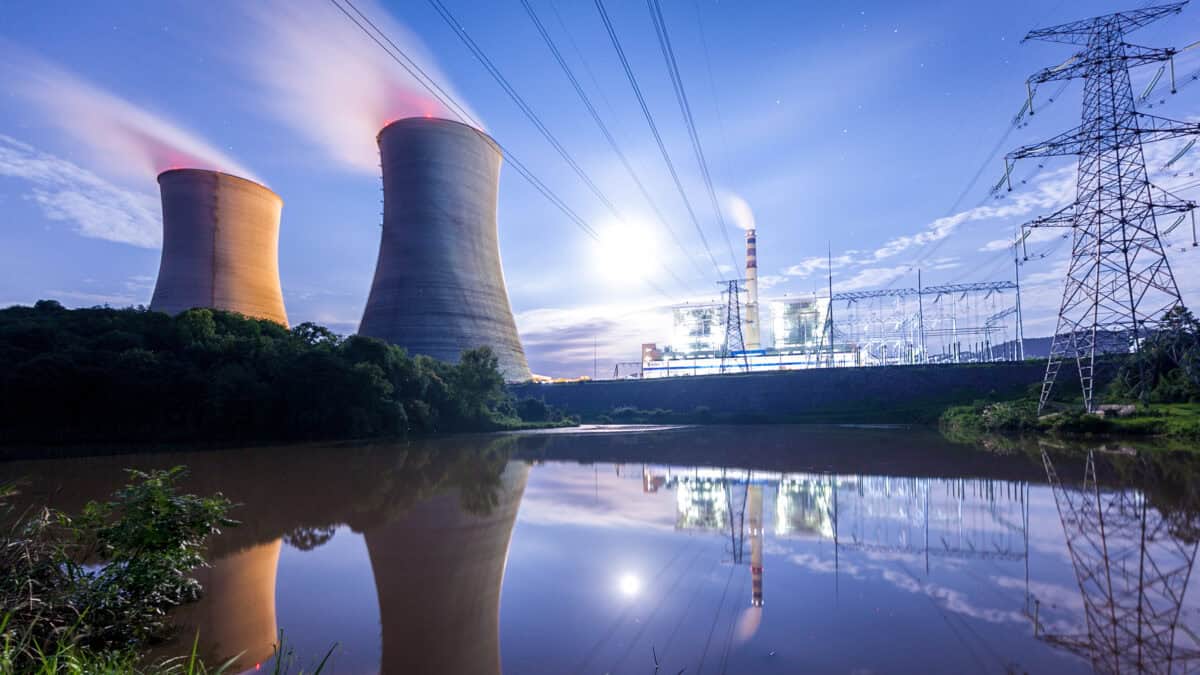
Source: Getty Images
Cameco sits at the center of the nuclear supply chain
Cameco (TSX: CCO), a Saskatoon-based company, is one of the largest uranium producers on the planet. In addition to mining, it also converts and enriches uranium into reactor-ready fuel through its Fuel Services segment. Moreover, it owns a stake in Westinghouse, the company that builds nuclear reactors.
In October 2025, Cameco, Brookfield, Westinghouse, and the U.S. government announced a partnership valued at at least US$80 billion to accelerate construction of new reactors across the United States using Westinghouse’s AP1000 design.
Six of those reactors are already running globally, and 14 more are under construction. Once a reactor is switched on, it typically requires fuel, maintenance, and support for 80 to 100 years. That is a long runway of recurring revenue for both Westinghouse and Cameco.
Cigar Lake, one of Cameco’s flagship mines, exceeded expectations in 2025 even as Cameco worked through a temporary production dip at McArthur River and Key Lake. Its Fuel Services division posted record production at its Port Hope facility. Cameco used the extra cash to pay off the remaining US$200 million on its term loan and raised its dividend a year earlier than planned.
My take: Cameco is a buy for the nuclear and AI power trade
I think Cameco is one of the cleanest ways for Canadian investors to bet on the nuclear revival that AI is driving. It controls uranium supply, fuel conversion, and a piece of the reactor-building business itself, giving it exposure to nearly every stage of the nuclear value chain.
Add in a fortress balance sheet, a growing dividend, and multi-decade contracts tied to reactors that will run for the rest of this century, and the setup looks compelling.
Uranium prices are volatile, and Cameco trades at a premium valuation due to massive future potential. Analysts tracking Cameco stock forecast free cash flow to expand from US$478 million in 2026 to US$3.1 billion in 2029. If Cameco stock is priced at 30 times forward FCF, it could more than double within the next three years.
For investors who believe the AI buildout will continue to demand more power, Cameco looks like a stock worth owning for the long haul.