Critical minerals sound like something Canadians should store in a bunker beside canned beans and batteries.
In reality, they’re the materials sitting underneath a surprising amount of the modern economy. Copper connects electricity grids and data centres. Uranium fuels nuclear reactors. Nickel, lithium and graphite feed batteries. Other minerals wind up inside everything from fighter jets to smartphones.
That helps explain why critical minerals repeatedly surfaced at the Canada Investment Summit.
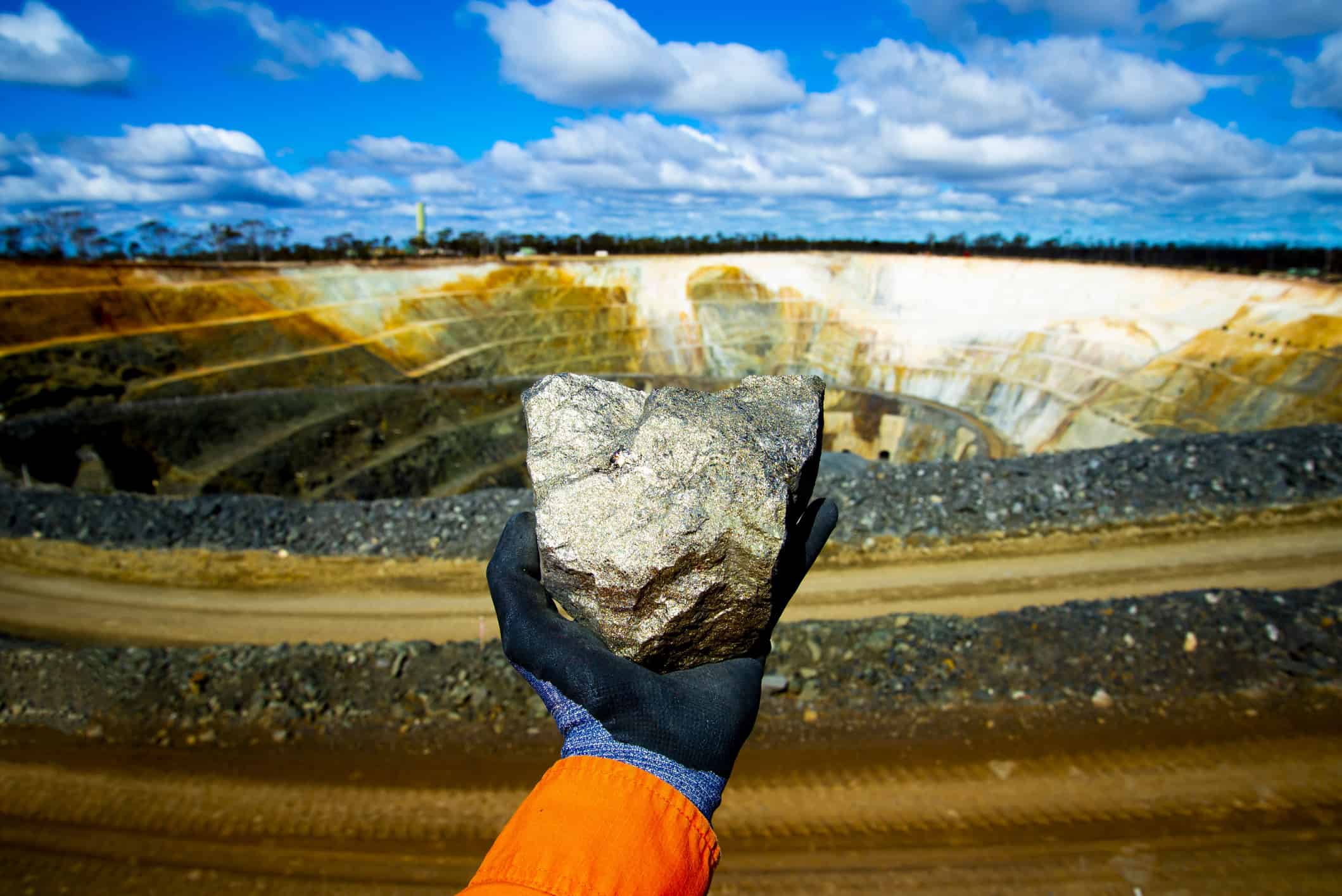
Source: Getty Images
Critically important
Prime Minister Mark Carney told investors Canada had signed more than 50 critical-minerals agreements with over 15 countries during the past year, unlocking $20 billion in investment while “reducing dependence on foreign chokeholds in critical supply chains.”
The summit even devoted an entire panel to the subject: “From the Ground Up: Powering Canada’s Mining and Critical Minerals Value Chain,” featuring the chief executives of Agnico Eagle, Cameco and Teck Resources (TSX: TECK.B).
Yet this wasn’t really a discussion about digging more holes. It was about who controls the materials powering the next economic cycle.
Why investors should care
Blackstone president Jon Gray put Canada’s advantage rather neatly during another summit panel.
“The natural resources here are simply extraordinary,” he said, pointing specifically to “the critical minerals, the natural gas, the hydro power.”
Those resources become increasingly valuable when governments don’t want strategic supply chains concentrated in countries they may not always agree with. Carney made that connection explicit.
“Strategic autonomy extends to building partnerships in core capabilities across AI, payments, space, critical minerals, and clean energy,” he told investors.
There’s the opportunity. AI data centres need enormous electrical systems. Electricity grids need copper. Defence manufacturing requires secure mineral supplies. Nuclear expansion needs uranium. Canada doesn’t merely have deposits. It also has established mining companies capable of developing them at scale.
The one I’d buy is Teck Resources.
Why Teck stands out
Teck has become increasingly concentrated around copper and zinc after reshaping its portfolio over the last several years. Copper is particularly interesting because it sits beneath so many of the summit’s biggest investment themes.
Building more transmission lines? Copper. Connecting giant AI data centres? More copper. Electrifying industry or expanding renewable generation? You guessed it.
Teck’s second-quarter copper production reached 135,900 tonnes, up 25% year over year. Adjusted earnings before interest, taxes, depreciation, and amortization (EBITDA) surged 204% to $2.2 billion, while operating cash flow reached $1.7 billion.
Its huge Quebrada Blanca operation also posted a third consecutive quarter of stable performance, an important improvement after a difficult ramp-up.
Getting bigger
Teck is also working toward its merger with Anglo American. The combination would create Anglo Teck, a Canadian-headquartered global mining company expected to rank among the world’s five largest copper producers. More than 70% of its exposure would come from copper.
That’s almost suspiciously well timed. Canada is trying to attract billions into critical minerals precisely as one of its largest mining companies prepares to become an even larger global supplier.
Teck shares recently traded around $90, close to their 52-week high near $100. At roughly 19 times forward earnings, investors aren’t uncovering some forgotten bargain. What’s more, copper prices are also cyclical, while the Anglo transaction still carries execution and regulatory risk. A global slowdown could hit metal prices long before Canada’s grand investment plans reach construction.
Bottom line
Still, Teck already has producing assets, cash flow and scale. The summit simply strengthened the argument for why those assets could become more strategically valuable.
Canada wants to build grids, data centres, defence industries and new trade relationships without depending on vulnerable mineral supply chains.
It already owns plenty of the rocks. Teck gives investors a way to own the company digging them up.