Nearly half of Canadian manufacturers expect U.S. tariffs to hurt their businesses over the next year. Garbage pickup, meanwhile, remains tariff-resistant.
That’s the kind of contrast I’d pay attention to when trade uncertainty starts interfering with costs, supply chains, and investment decisions. Investors don’t need to abandon manufacturers. They can make sure part of the portfolio earns money from services customers can’t easily postpone.
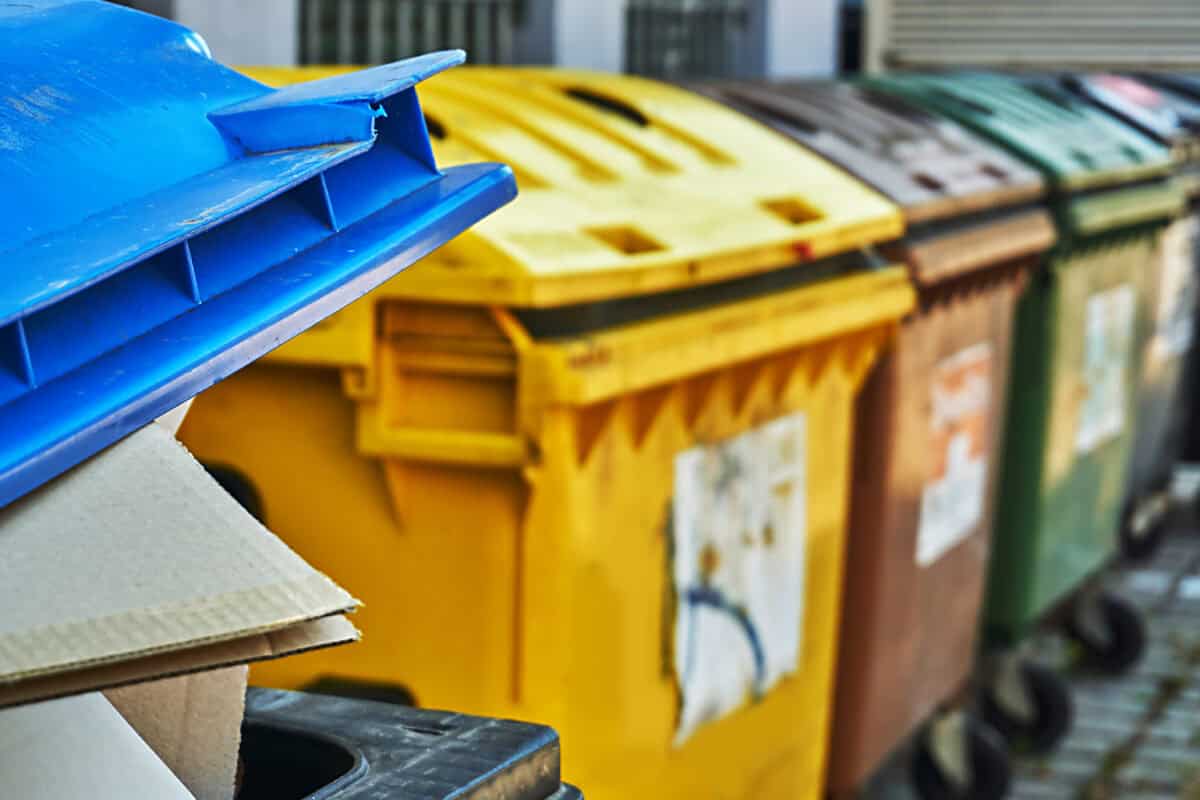
Source: Getty Images
The pressure is real
Statistics Canada found 49.7% of manufacturing businesses expected U.S. tariffs on Canadian imports to negatively affect them over the following 12 months in its third-quarter survey. Manufacturers were also among the businesses most concerned about inflation and finding skilled workers.
The trade environment became tougher in September. Canada introduced new counter-tariffs of 15%, 25%, and 50% on $27.6 billion of U.S. imports after the United States imposed 50% tariffs on $27.6 billion of Canadian goods.
Manufacturers can respond by changing suppliers, raising prices, or shifting production. Yet none of those options is particularly efficient. I’d therefore balance economically sensitive holdings with a company selling something businesses and households continue needing through trade disputes, recessions, and political changes. That brings me to Waste Connections (TSX: WCN).
Taking out the trash
Waste Connections provides solid-waste collection, transfer, recycling, and landfill services across Canada and the United States. Nobody wakes up during a tariff dispute and decides the garbage can wait until international trade relations improve. That recurring demand gives the company unusually defensive characteristics.
Waste Connections also focuses heavily on secondary and rural markets where competition can be lower and disposal assets difficult to reproduce. The business isn’t immune to an economic slowdown. Commercial waste volumes can weaken when construction or business activity slows. Yet the basic service remains necessary.
Growth keeps arriving
Second-quarter revenue increased 6.4% year over year to US$2.6 billion. Adjusted earnings before interest, taxes, depreciation and amortization (EBITDA) increased 6.8% to US$840 million, while its margin reached 32.8%.
Those results were strong enough for management to raise its full-year outlook. Waste Connections now expects 2026 revenue of US$10.02 billion to US$10.05 billion and adjusted EBITDA of US$3.33 billion to US$3.34 billion.
Acquisitions provide another growth lever. The company completed purchases representing more than US$100 million of annualized revenue during the first half. It also repurchased US$614.5 million of shares. That’s the kind of mix I like in Canadian blue-chip stocks: recurring demand, organic growth, acquisitions, and cash returned to shareholders.
Don’t call it cheap
Here’s the problem. Waste Connections recently traded around $219.87 on the TSX and roughly 26.6 times forward earnings. That’s a premium valuation for garbage collection, even very profitable garbage collection. The quarterly dividend is also only US$0.35 per share, so investors seeking immediate dividend income can find much larger starting yields elsewhere.
Fuel costs remain another risk. Management specifically noted sharply higher fuel costs during the second quarter, although pricing and fuel recovery helped offset the pressure. A recession could also reduce commercial volumes, while acquisition-heavy growth always brings integration and valuation risk.
Bottom line
Tariffs can raise costs, disrupt suppliers, and make manufacturers rethink investment. Waste still needs collecting.
Waste Connections doesn’t offer the cheapest stock or the biggest dividend on the TSX. It offers something I find increasingly useful. A service customers need regardless of what crosses the border next. When uncertainty rises, boring invoices can become surprisingly attractive.