If you ask a Canadian, which is the best dividend stock for retirement passive income, Enbridge (TSX:ENB) would be a common answer. This stock has been investors’ favourite for decades because of its economic resilience and strong dividend history. Energy infrastructure is a sustainable way to earn dividends from toll money collected for transmitting oil and gas and facilitating Canada’s largest export of oil to the United States.
Source: Getty Images
Enbridge is an excellent investment
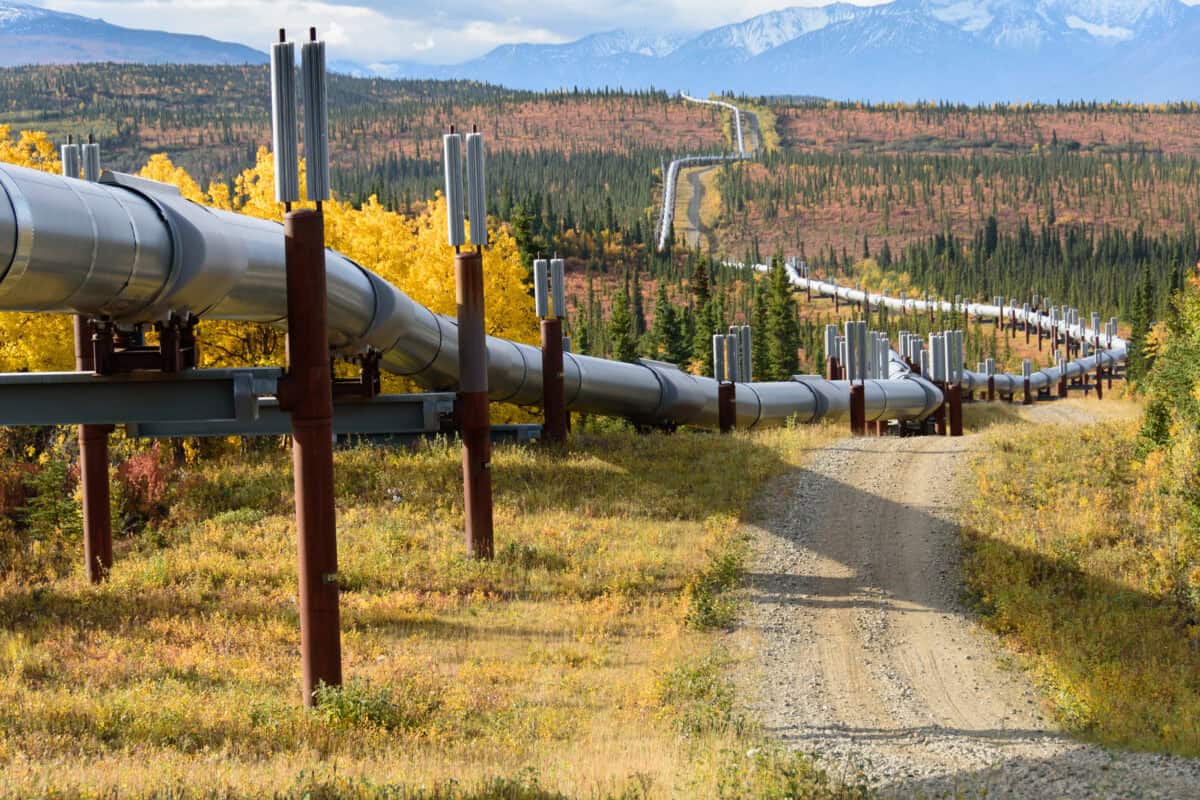
Enbridge has market leadership, transmitting 30% of the crude oil produced in North America, and nearly 20% of the natural gas consumed in the United States. Last year, it acquired two U.S. gas utilities to become North America’s largest natural gas utility by volume. The company has diverse revenue streams that will keep cash flowing in every economic condition.
This assurance of stable cash flow comes from Enbridge’s low-risk model.
However, Enbridge increased its debt last year to fund its gas utility acquisition. This has increased its leverage ratio to 4.7, which is within the target range of 4.5 to 5.0.
The company has also slowed its dividend growth from 10% in 2020 to 3% in 2021 as it focused on accelerating gas pipeline construction to tap North America’s liquified natural gas (LNG) export market.
But…
The pipeline infrastructure gives stability, but it reduces flexibility. In the wake of a changing global supply chain, countries are looking to diversify their trading partners. For years, Canada has been supplying more than 99% of its oil to the United States and now faces a 10% tariff. If Canada decides to shift its supply chain, the pipeline infrastructure could cost billions of dollars, reducing flexibility.
Enbridge has high capital expenditure. It spends 8% of its revenue, paying interest on the debt. This debt further reduces its dividend growth potential. The company expects to grow its dividend by 5% from 2027 onwards, which is above the inflation rate.
Enbridge is a low-risk, moderate dividend-growth stock, which is excellent. But what if you can get a higher dividend growth of 10-20% with a similar dividend yield, with slightly higher risk?
I prefer this stock
The current macroeconomic environment has taught us that 5% is not enough. You need a dividend stock that can grow your passive income. Such growth needs financial flexibility. Canadian Natural Resources (TSX:CNQ) has one of the largest oil sands reserves, which has a lower maintenance cost compared to shale oil. The slow-depleting, low-maintenance reserves give Canadian Natural Resources a cost advantage and help it earn profit even at US$50 West Texas Intermediate per barrel.
Unlike Enbridge, CNQ has volatile cash flows due to its exposure to oil and gas prices. However, it has a diversified product mix of Synthetic Crude Oil, which sells at a higher price, and LNG.
I prefer CNQ because
- It has a low capital investment requirement. It takes loans to acquire new oil reserves. These acquisitions are immediately accretive, which helps it repay debt faster.
- CNQ experiences windfall gains when the WTI price rises, and passes these gains to investors through special dividends.
- It has been growing its dividends by 10-20% in the last 10 years, even after the 2014 oil crisis permanently reduced the WTI crude price from US$100 to US$65/barrel.
- The last 20-year dividend growth was driven by share buybacks and increased oil production.
CNQ aims to reduce its net debt to $16.7 billion in 2025 and keep it below $12 billion target. Hence, when net debt is above the target level, it diverts more free cash flow toward debt repayment to maintain financial flexibility.
Enbridge vs. Canadian Natural Resources
There is a slight difference in the dividend yield of the two stocks. Enbridge’s yield is 5.65% while CNQ’s is 5.59%. However, the latter offers a 10% dividend growth compared to the former’s 3%. Moreover, Enbridge’s management has clarified that it could feel the heat if tariffs are prolonged. That is not a problem with CNQ, as it can sell its oil in the open market.
In summary, Enbridge is still an excellent stock, but the changing energy environment needs flexibility, making Canadian Natural Resources a better choice for risk takers.