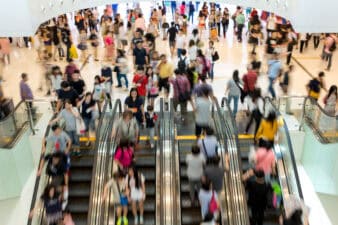
Tariffs don’t stop at the border. They work their way through imported equipment, packaging, ingredients, transportation, supplier negotiations, and eventually the checkout line.
Canada’s latest counter-tariffs took effect in September across billions of dollars of U.S. imports. That doesn’t mean every grocery bill is suddenly a tariff bill. Statistics Canada actually reported that food purchased from stores rose 2.8% year over year in August, slower than July.
The pressure is more targeted. For retailers, that makes purchasing power unusually valuable.
Source: Getty Images
Scale becomes useful
A small retailer receiving a price increase from a supplier has limited places to hide. A national grocer can negotiate across enormous volumes, shift shelf space toward another supplier, promote private-label products, change package sizes, or steer shoppers toward discount banners.
That’s one reason I’d look at Loblaw Companies (TSX: L). Loblaw operates Loblaws, No Frills, Real Canadian Superstore, Maxi, Shoppers Drug Mart, T&T, and other businesses. President’s Choice and No Name also give it large private-label portfolios. Those brands don’t make Loblaw immune from input inflation. However, they give management more control over sourcing, merchandising, and pricing.
The margin test
The latest quarter provides a useful test. Retail revenue increased 4.1% year over year to $15.1 billion. Food same-store sales rose 1.6%, while Shoppers Drug Mart same-store sales increased 4.6%. E-commerce sales also jumped 19.3%.
The number I care about for this headline is gross margin. Loblaw’s retail gross margin was 32.2%, up 10 basis points from a year earlier. That’s not an enormous increase, though it shows the company maintained its spread between what products cost and what customers paid despite a difficult consumer and cost environment.
Adjusted diluted earnings per share (EPS) increased 11.9%. For investors looking for Canadian blue-chip stocks, that combination of defensive demand and margin control is useful when trade policy becomes less predictable.
Discount wins
Consumers don’t simply accept higher prices because a retailer has higher costs, they trade down. Loblaw’s discount banners again outperformed during the quarter. The company has been adding more hard-discount locations as shoppers continue looking for value.
That helps Loblaw retain the customer even when household budgets tighten. A shopper may leave a more expensive banner and head to No Frills. Loblaw would prefer they don’t leave the corporate family entirely. What’s more, pharmacy and healthcare also add revenue that isn’t tied directly to grocery inflation.
The price deserves attention
After its stock split, Loblaw recently traded at about $62. The shares trade around 28 times trailing earnings and roughly 24 times forward earnings. That’s a substantial valuation for a grocery and pharmacy company.
Competition remains fierce. Consumers are price sensitive, labour expenses can rise, and governments remain highly interested in grocery pricing. The sale of PC Financial also changes the company’s earnings mix going forward.
I’d therefore build a position gradually when buying stocks in Canada instead of assuming defensive automatically means inexpensive.
Bottom line
The trade war doesn’t need to send overall grocery inflation soaring for retailers to feel pressure. Individual imported products and inputs can still become more expensive.
Loblaw has something smaller competitors may lack. It offers enormous purchasing scale, private labels, discount stores, pharmacy revenue, and enough formats to keep customers inside its network when they trade down.
Tariffs can push costs higher. Loblaw’s job is to stop every increase from taking the express lane straight through its margins.