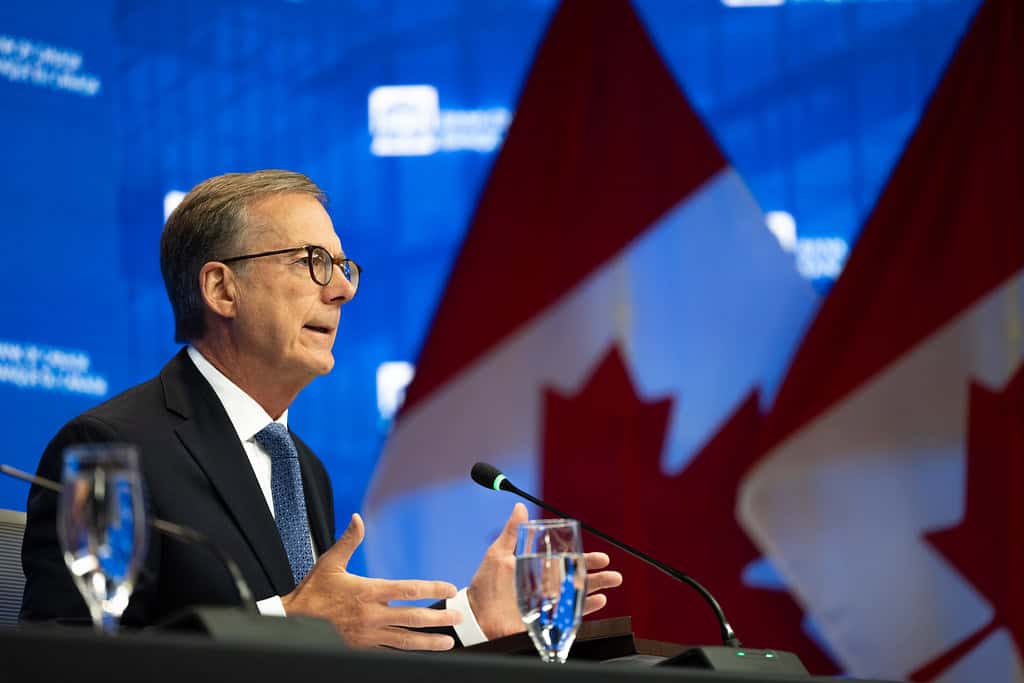
A better guaranteed investment certificate (GIC) rate is welcome news for anyone tired of taking risks just to earn a little income. The Bank of Canada’s (BoC) October 28 decision raised its policy rate by a quarter-point to 2.5%, giving savers another reason to compare guaranteed returns with dividend stocks. That said, a company needs to offer something worth owning beyond a cheque that a deposit could match.
Give the guarantee its due
The rate hike doesn’t mean every GIC offer will immediately rise by a quarter-point. Banks price those products using funding needs, market rates, and expectations that may already reflect today’s announcement. Still, it’s a good time to compare available offers before locking money away. Your timeline should guide the choice, especially when those savings have a bill to pay within the next year.
A GIC generally promises interest and principal repayment under its terms. Eligible deposits can also receive deposit insurance within the applicable limits. Suppose a one-year offer improves from 4% to 4.25%. On $10,000, annual interest would rise from $400 to $425 before tax. That extra $25 is useful, although it shouldn’t decide an entire retirement strategy.
A dividend stock offers a different bargain. Its payment can grow, but its share price can fall and its dividend can be cut. Collecting $400 doesn’t offset a $1,000 price decline if you need to sell immediately. Over several years, growing business profits can support larger payments and a higher share price. That’s why money needed soon deserves more protection than savings you can leave invested.
Business behind the cheque
Sun Life Financial (TSX: SLF) offers that longer-term possibility. It earns from insurance, workplace benefits, and managing money across several markets. Customers need protection and retirement savings through changing interest-rate cycles.
Its second-quarter underlying earnings were $2.02 per share. Against that, the quarterly $0.96 dividend used about 48% of underlying profit. This adjusted earnings measure removes certain items, but the comparison still shows meaningful profit retained within the business.
At a recent share price of $111.51, the annualized $3.84 payment yields about 3.4%. A $10,000 budget buys 89 whole shares for $9,924.39. Those shares would produce $341.76 annually if the payment stays unchanged, with $75.61 left in cash before fees.
| COMPANY | RECENT PRICE | NUMBER OF SHARES | ANNUAL DIVIDEND | ANNUAL TOTAL PAYOUT | FREQUENCY | TOTAL INVESTMENT |
|---|---|---|---|---|---|---|
| SLF | $111.51 | 89 | $3.84 | $341.76 | Quarterly | $9,924.39 |
The dividend alone wouldn’t beat the illustrative 4% GIC. Sun Life needs earnings growth to provide the additional appeal. That’s a reasonable ambition for a diversified financial business, but it comes with insurance claims, market swings, and competition for customers.
Leave time for growth
I like Sun Life for the long-term part of an income portfolio. I wouldn’t sell a suitable GIC holding just to collect its dividend. A retiree can own both and give each a clear job.
Cash and maturing deposits can cover upcoming spending. Shares can remain invested while the company builds profits. That arrangement makes it easier to sit through a disappointing quarter without selling a business you still want to own.
Tax also changes the comparison. Interest and eligible Canadian dividends receive different treatment in taxable accounts. Inside a Tax-Free Savings Account (TFSA), eligible returns are generally sheltered from Canadian tax, making the underlying risk and return easier to compare.
Bottom line
Today’s hike strengthens the case for comparing guaranteed savings options. It doesn’t remove the appeal of dividend investing. I’d keep near-term money protected and consider Sun Life for savings that have years to grow. A good investment plan can make room for dependable interest now and a business that could deliver more income over time.