If you’re starting 2026 with $21,000 in a Tax-Free Savings Account (TFSA), simple can be the best kind of smart. A beginner portfolio doesn’t need 10 tickers or constant tinkering. It needs a few holdings that you understand and can keep through a rough year, and that do different jobs. A bank can bring earnings power and a dividend culture. A regulated utility can add the bill-paying feel that many investors want. A pipeline can add long-life infrastructure cash flow. A broad ETF can keep you from leaning too hard on Canada alone. So let’s consider some on the TSX today.

Source: Getty Images
BMO
Bank of Montreal (TSX:BMO) can be the financial anchor. In its fiscal third quarter of 2025, it reported net income of about $2.4 billion and adjusted net income of about $2.3 billion, with adjusted earnings per share (EPS) of $3.12. It also showed that provisions for credit losses were higher than a year earlier, which is a useful reminder that banking risk never fully goes away.
BMO is less about one quarter and more about the runway. If you reinvest dividends and hold through cycles, a big Canadian bank can compound quietly. The beginner mistake is treating it like a guaranteed income product. It’s still a stock. Credit losses can rise quickly if the economy slows, and bank shares can drop before they recover.
H
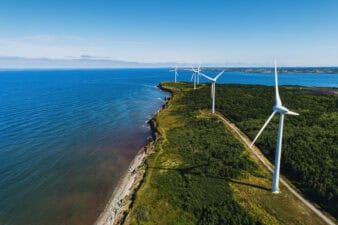
Hydro One (TSX:H) is the steadier business in the group. In its third quarter of 2025, it posted basic EPS of $0.54 and adjusted EPS of $0.56, both higher than the prior year. It also approved a 6% dividend increase, lifting the quarterly dividend to $0.32 per share starting in 2026.
The trade-off is that utilities can be sensitive to interest rates and valuations. When bond yields rise, utility stocks can sag even if operations are fine. Hydro One also needs ongoing capital spending to maintain and expand the grid, so execution and regulatory outcomes matter. Still, regulated earnings can make it easier to hold than many cyclicals.
TRP
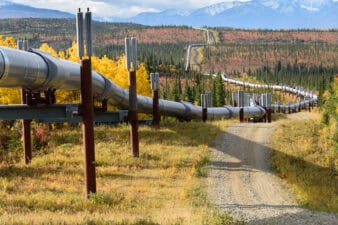
TC Energy (TSX:TRP) adds the infrastructure sleeve. In the third quarter of 2025, it reported comparable earnings of $1 billion, or $1.01 per share, comparable earnings before interest, taxes, depreciation and amortization (EBITDA) of $2.6 billion, and cash flow from operations of $3.6 billion. It also declared a quarterly dividend of $0.96 per common share, and highlighted progress on major projects and the planned separation of its liquids pipeline business.
If the Bank of Canada signals multiple cuts, that can help rate-sensitive names like utilities and pipelines. Lower rates can reduce refinancing pressure over time, and investors often pay more for long-lived cash flows when rates fall. The catch is that cuts can also mean growth is slowing. With TC Energy, you still need to watch leverage, project execution, and how costs and demand evolve.
XEQT
This is where iShares Core Equity ETF Portfolio (TSX:XEQT) earns its keep. It’s a one-ticket, all-equity portfolio that holds U.S., Canadian, developed international, and emerging-market stocks and rebalances automatically. Fees are low for the coverage, with a 0.20% management expense ratio (MER). Distributions are quarterly and modest, so think growth and diversification first.
Taken together, BMO, Hydro One, and TC Energy can work as a simple Canadian trio as they diversify across financials, regulated power delivery, and energy infrastructure, and each one has a meaningful income component. Add XEQT for global breadth, and you have a beginner setup that is easy to understand and easy to maintain. The best way to make it work is boring. Pick a split you can stick with, contribute regularly, and let time do the heavy lifting.
Bottom line
One practical approach is to make the ETF your base, then use the three stocks to add Canadian income. For example, you could hold about half in XEQT and split the rest across the three. Here’s what $15,000 in XEQT could look like, and $5,000 in each stock.
| COMPANY | RECENT PRICE | NUMBER OF SHARES | DIVIDEND | ANNUAL TOTAL PAYOUT | FREQUENCY | TOTAL INVESTMENT |
|---|---|---|---|---|---|---|
| XEQT | $40.52 | 370 | — | — | — | $14,992.40 |
| H | $53.88 | 92 | $1.33 | $122.36 | Quarterly | $4,956.96 |
| TRP | $75.67 | 66 | $3.40 | $224.40 | Quarterly | $4,994.22 |
| BMO | $184.43 | 27 | $6.68 | $180.36 | Quarterly | $4,979.61 |
Rebalance once or twice a year and reinvest distributions while you are still building in the TFSA. And ignore the day-to-day market noise.