The Bank of Canada (BOC) has hiked the interest rate by 25 basis points for the first time since July 2023, after the US Fed hiked its interest rate in September 2026. Rate hikes are typically introduced when the economy is strong to cool demand and control inflation. The current hike comes as energy supply disruptions from the Middle East war spike energy and commodity costs.
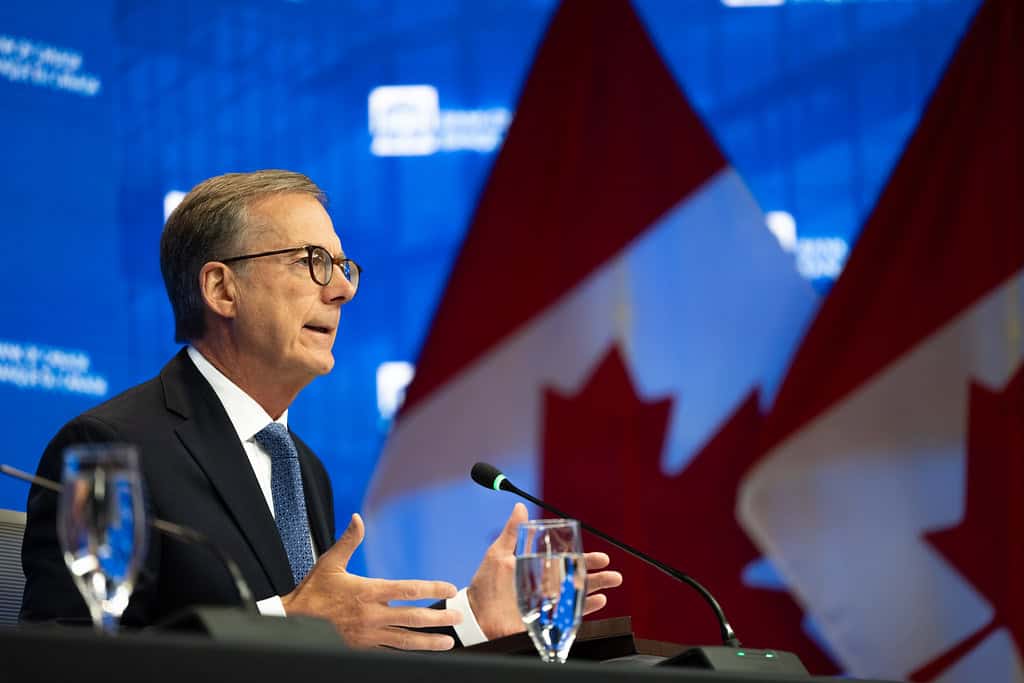
Governor Tiff Macklem; Source: Bank of Canada
Is the recent BOC rate hike good for stocks?
An interest rate hike helps keep economic growth from running out of control. The key objective of the rate hike is to keep inflation in check so that growth is sustainable. Higher interest rates make debt expensive, pushing individuals to spend wisely instead of splurging.
Think of it like teaching your child budgeting. If they keep asking you for money and you keep giving it to them with a promise of completing a house chore (interest expense), they will keep taking more. To control their spending, you increase the promise to complete a house chore plus get an A in Math. Now that makes them think before they spend, as money is no longer easily available.
The discretionary segment is the first to take a hit when the rules of money change. That money is now channelled towards essentials like food, house maintenance, and gasoline. As for businesses, they slow expansion.
What could a rate hike do to AI stocks?
When we talk about businesses slowing expansion, artificial intelligence (AI) is the first to take a hit. Capital markets have already poured billions of dollars into AI infrastructure. The market is now facing the Big Tech Debt. Hyperscalers may absorb a rate hike of 25 basis points, but they cannot absorb a series of rate hikes. AI data centres have yet to give the desired returns on the existing buildout.
Even if tech stocks are not overvalued, those with Big Tech Debt on their balance sheet could see a dip in their share price with every rate hike. And it is not just AI; all companies with huge debt and little financial flexibility could be negatively affected. Now would be a good time for companies to accelerate debt repayments. If Telus or Enbridge reduce their debt, they could see an upside.
However, smart investors do not leave their portfolio to chance. Instead, they take this opportunity to book profit and rebalance it into inflation-hedged stocks.
Here is what to do with your TFSA
The first rate hike gives you an opportunity to adjust your Tax-Free Savings Account (TFSA) portfolio to the looming uncertainty of high inflation and a slowdown in expansion. Follow the money trail. BOC expects inflation at 3.5% for the remainder of 2026 and 3% and above in 2027. This inflation will stem from high energy prices being passed on to consumers.
Energy stocks are a good place to rebalance your profits from AI stocks. Cenovus Energy (TSX: CVE) stock has dipped 6.2% as energy prices eased briefly on US-Iran peace talks. However, this may be short-lived as the end of war seems nowhere in sight. High oil prices will bring surplus cash flow to the company, which it may use to reduce net debt to its target of $4 billion and fund expansion. Last month, it signed a definitive agreement to acquire Athabasca Oil Corporation for $5.7 billion.
Discount retailer Loblaw (TSX: L) remains unaffected by AI, the pandemic, and the tariff war. In fact, it thrives at such times by selling the bare minimum – food, pharmacy, and healthcare. Loblaw is not immune to risk. Changing consumer trends, inventory going bad, and underperforming stores are part and parcel of retail. However, Loblaw’s retailing experience since 1919 has helped it perfect its model for various crises.
The tariff war-induced “Buy Canadian” moment, energy price-driven inflation slowing discretionary spending, and rising interest rates have only pushed Loblaw stock up 24% in a year, outperforming the Nasdaq 100’s 9.3% rally. This contrarian momentum shows that the market environment favours a defensive approach over growth.