Canadian investors are searching for top TSX dividend stocks to add to a self-directed Tax-Free Savings Account (TFSA) portfolio focused on generating rising income and long-term total returns.
The market rally over the past three years has pushed valuations in many companies to elevated levels, but some stocks have pulled back from their 2026 highs and are now offering good dividend yields with a shot at decent capital upside on a rebound.
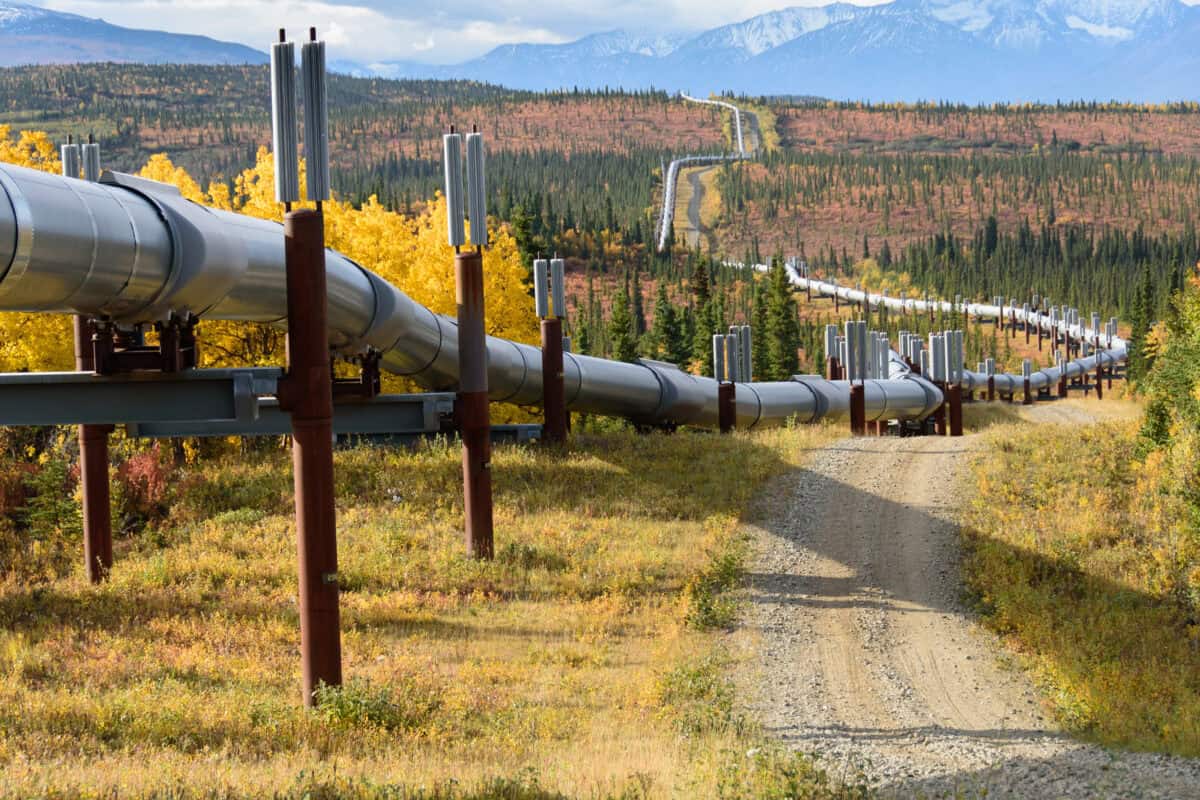
Source: Getty Images
Enbridge
Enbridge (TSX: ENB) is a leader in the North American energy infrastructure industry. The company moves nearly 30% of the oil produced in Canada and the United States and about 20% of the natural gas used by American homes and businesses.
Enbridge’s market capitalization of more than $150 billion gives it the financial clout to make large strategic acquisitions while also pursuing an aggressive development program. In recent years, the company made most of its purchases in the United States, where there has been more favourable energy policy and more opportunities to diversify its assets beyond the historic oil transmission infrastructure. Enbridge spent US$3 billion in 2021 to buy an oil export terminal in Texas. It also forked out US$14 billion to buy three American natural gas utilities in 2024. Along the way, Enbridge bulked up its renewable energy group, as well, adding the third largest U.S. solar and wind developer to the portfolio.
The new assets are now benefiting from increased demand for oil, natural gas, and power. Global buyers are scrambling to secure energy from Canada and the United States to replace disrupted supplies from Russia and the Middle East. At the same time, domestic demand for electricity is rising as new AI data centres consume heavy power loads. Gas-fired power generation facilities are being built to provide the added electricity.
On the development side, Enbridge is working through a $38 billion capital program with investments spread out across the various business lines. As the projects are completed and start to generate revenue, Enbridge expects earnings and distributable cash flow to rise by about 5% per year over the medium term.
Risks
Enbridge trades near $68 per share at the time of writing, compared to $80 a few months ago. The decline is largely due to rising yields in bond markets and the recent rate hikes put in place by the Bank of Canada and the U.S. Federal Reserve to head off inflation. Enbridge uses debt to fund part of its growth program. Higher borrowing costs can reduce profits and cut into cash that is available to reduce debt or raise dividends.
The last time the central banks had to aggressively increase interest rates, in 2022 and 2023, Enbridge’s share price slipped from $59 to $44. The subsequent rebound that took the stock back to new highs began in late 2023 when the central banks indicated they were finished pushing rates higher. Rate cuts in 2024 and 2025 added a tailwind to the rally in infrastructure and utility stocks.
Inflation isn’t as high today as it was in the middle of 2022, so the pace and size of rate increases should be more modest this time around. That being said, any moves by the central banks that are more aggressive than anticipated would likely put more pressure on the stock in the short term.
Time to buy?
A good chunk of the rate risk is likely already priced in at this point, so contrarian investors might want to start nibbling. Those who buy ENB at the current level can pick up a dividend yield of 5.7%.
If rates do spike, you at least get paid well to ride out some additional turbulence and the strong capital program should enable the board to continue raising the dividend at a steady pace. Enbridge has increased the distribution in each of the past 31 years.