If you’re looking to start investing, exchange-traded funds (ETFs) are easily one of the simplest ways Canadians can put their money to work, especially if you’re a newer investor who’s still trying to figure out which stocks you want to own.
And while there are a tonne of high-quality and exciting businesses to choose from on the stock market, building a portfolio means thinking about more than just finding one impressive company or a handful of flashy stocks.
At the same time, you want your money spread across different opportunities, without making the process so complicated that you keep putting it off, or accidentally create more risk for yourself.
That’s why exchange-traded funds can be so useful, since they offer investors a simple and, importantly, low-cost way to buy a collection of investments through one purchase.
So, if you’re new to investing or just simply looking to better understand your options, here’s how ETFs work and how they can fit into your portfolio.

Source: Getty Images
What is an ETF, and how does it work?
The easiest way to think about an ETF is that it offers exposure to a portfolio of investments through one purchase, rather than just one company when you buy an individual stock.
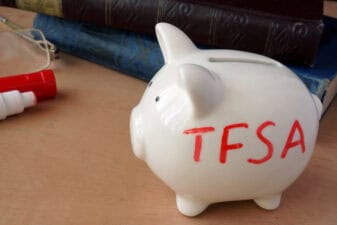
That can include stocks, bonds and other assets, while some ETFs also use options as part of their strategy. Plus, they trade on stock exchanges just like individual stocks, so you can buy them through your brokerage, including inside your TFSA or RRSP.
Furthermore, many popular ETFs follow an index, meaning they aim to match the performance of a particular group of stocks, such as the TSX or S&P 500 in the U.S.
For example, the Vanguard All-Equity ETF Portfolio (TSX: VEQT) gives you exposure to thousands of stocks across Canada, the United States and other markets.
That means one investment can give you access to banks, retailers, technology companies and plenty of other businesses, spreading your money across different industries and countries.
As those businesses grow and become more valuable, your investment can grow alongside them. Plus, the dividends the fund collects can be paid to investors as distributions, which you can reinvest to keep compounding your returns.
How to choose ETFs that fit your portfolio
Although buying ETFs can help to simplify investing considerably, you still need to look at what a fund owns, since you can use ETFs to buy a broad market or target specific industries and types of investments.
For example, while VEQT gives you exposure to thousands of businesses across different industries and countries, the BMO Equal Weight Banks Index ETF (TSX: ZEB) holds Canada’s six largest banks, giving you a way to invest in that industry without having to pick one bank yourself.
So, ZEB still offers diversification, but only within Canadian banking, which is a very different level of diversification from what you get with a global fund like VEQT.
That’s why many investors own multiple ETFs to balance their exposure and add more of the industries or investments they want in their portfolio. Still, though, it’s important to understand each fund’s holdings because separate funds can own many of the same companies.
For example, Shopify (TSX: SHOP) is already among VEQT’s largest holdings and is also a major holding in the iShares S&P/TSX Capped Information Technology Index ETF (TSX: XIT).
So although more tickers can seem like more diversification, there are times when you could just be adding more exposure to a company you already own through another fund.
With that said, though, if there was one stock you wouldn’t mind having more exposure to, Shopify is among the top candidates, with its e-commerce platform giving it a tonne of long-term potential as merchants grow their businesses and e-commerce only continues to gain popularity.