The Registered Retirement Savings Plan (RRSP) dominates the retirement market because it gives immediate returns through tax deductions. RRSP contributions are deducted from your taxable income, but withdrawals are taxable, and they don’t add back to your contribution room. So, if you withdraw $20,000 from an RRSP, not only do you pay tax on it, but you lose the chance to use that contribution room again.
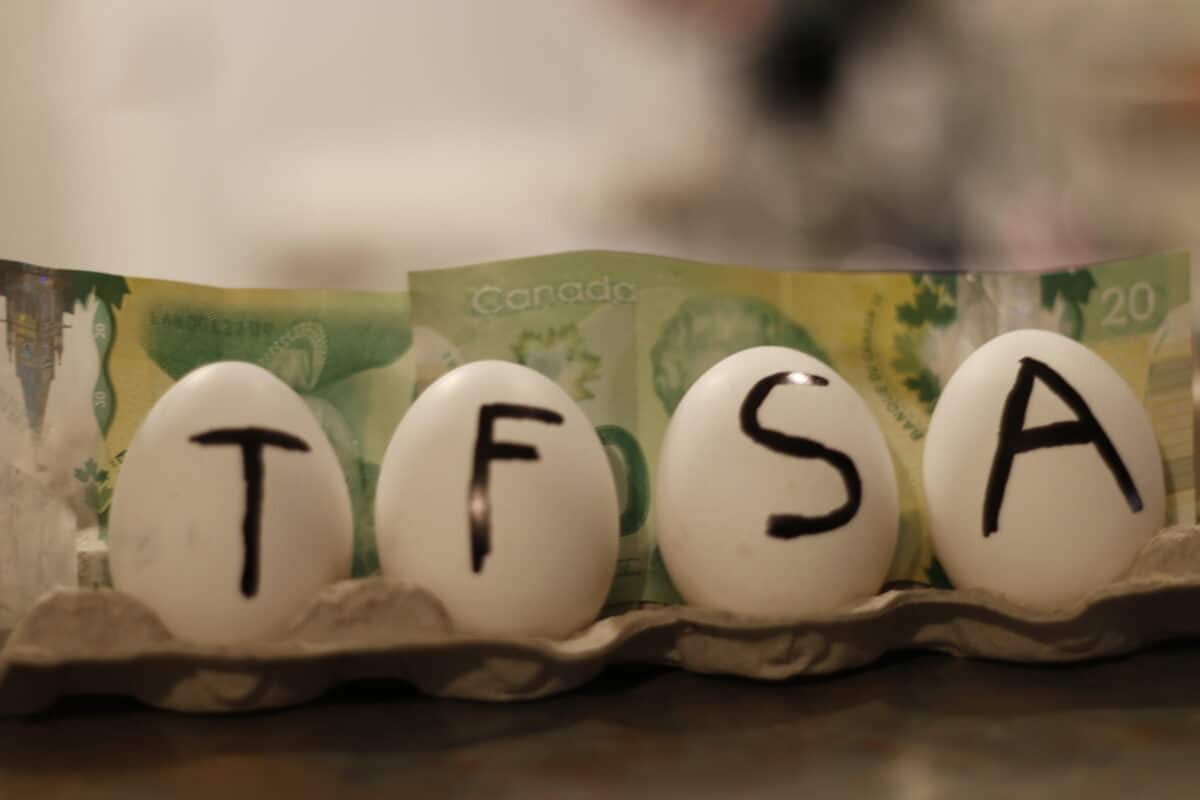
Your Tax-Free Savings Account (TFSA) fills the gaps created by the RRSP, making it an ideal retirement account to use alongside the RRSP.
Source: Getty Images
Pros of using the TFSA as a retirement account
Firstly, the TFSA adds back withdrawals to your contribution room on January 1.
Secondly, you can open a TFSA at age 19, but there is no age limit to close it. You can contribute and withdraw from a TFSA till your last breath.
Lastly, a TFSA allows tax-free withdrawals. When you retire, you can withdraw from your TFSA without affecting your income-tested benefits like Old Age Security (OAS) and Guaranteed Income Supplement (GIS).
If you have significant taxable retirement income like an employer pension, Canada Pension Plan, and a huge RRSP portfolio, you might want to build a sizeable TFSA portfolio. Because after 71, an RRSP must be converted into a Registered Retirement Income Fund (RRIF), which has a mandatory minimum withdrawal that is taxable.
Cons of using a TFSA as a retirement account
However, a TFSA alone may not be an efficient retirement account.
Firstly, TFSA contributions are not tax-deductible.
Secondly, dividends on US shares are subject to withholding tax, even when invested through a TFSA. However, US dividends are tax-free in an RRSP.
Strategies to boost retirement savings
An ideal strategy is to initially max out on TFSA contribution room when you are in a low-income bracket. When your income grows substantially, consider maxing out your RRSP contribution to save taxes and use those tax savings to invest in a TFSA.
Many cannot afford to max out both their RRSP and TFSA. In this scenario, you could consider maxing out your TFSA and using TFSA withdrawals to contribute to your RRSP in your high-income years. This way, you do not lose your TFSA contribution room and also get the RRSP tax benefit.
Two stocks to boost a TFSA retirement portfolio
If you are in your 30s, growth stocks can help you build a sizeable TFSA portfolio. Most tech stocks have collapsed after the Nvidia debacle and Anthropic IPO. Even the International Monetary Fund, in its latest Global Financial Stability Report, warned of an artificial intelligence (AI) market correction as rising debt and “circular financing” reset the value of AI-linked assets. Banks, insurers, and pension funds that have invested in AI infrastructure could feel the pressure.
You could consider rebalancing your portfolio by selling some tech, bank, and financial institution stocks and buying defensive stocks like gold and companies with low debt.
Lundin Gold
Now is a good time to buy Lundin Gold (TSX: LUG) as the stock falls alongside gold prices when interest rates rise. If economic growth slows from an AI correction, gold prices could double. Gold prices almost doubled between 2008 and 2011. The gold mining company has no debt and lower all-in sustaining costs. This lower cost will help it pay a fixed annual dividend per share of $1.20 through the downturn and grow its share price when gold prices surge.
Bombardier stock
Business jet maker Bombardier’s (TSX: BBD.B) share price has dipped 16.8% since November 11 after surging 10.5% between November 6 and 10 on third-quarter 2026 earnings. The management increased its 2026 free cash flow outlook to US$1.3 billion from US$1 billion, and its order book also swelled. Maximum aircraft deliveries happen in the fourth quarter, driving its stock price in the first quarter.
At the end of September 2026, Bombardier reduced its long-term debt by US$1.1 billion to US$4.1 billion, and in November also repaid $750 million in debt due in 2030, safeguarding its balance sheet from liquidity risk.