



Canadian investors may open a brokerage account to start investing in the stock market and other asset classes. However, they need to know which registered account to prioritize, and when.
Source: Getty Images
Which investing account should Canadians open first in 2026?
Investors need to start with one key piece of information. Growth inside a registered account is tax-sheltered, while growth in a taxable account is not. So, prioritize investing in registered accounts and maximize the contribution room in each.
Here are the three registered accounts in Canada.
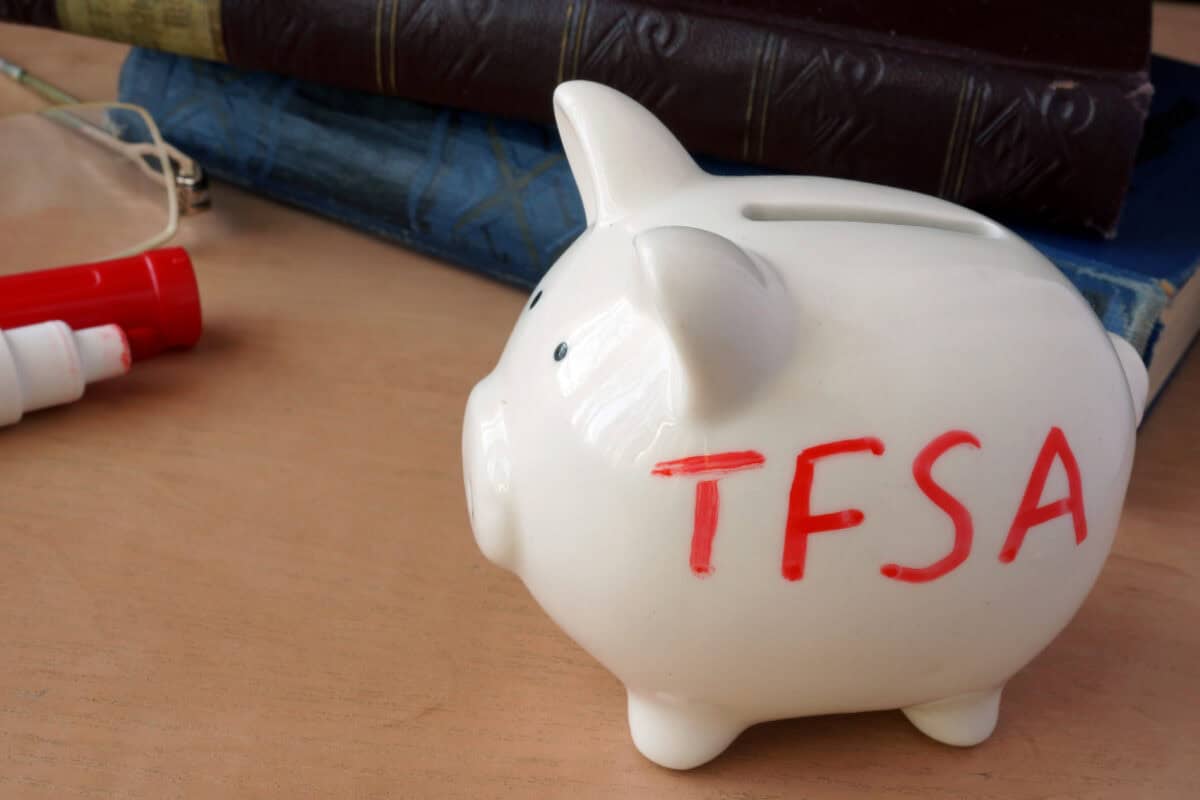
- Tax-Free Savings Account (TFSA): The annual contribution limit in 2026 has increased by $7,000, plus any unused room. Someone eligible since 2009 has $109,000 in total room.
- Registered Retirement Savings Account (RRSP): You can contribute 18% of last year’s earned income, up to $33,810, plus any unused room.
- First Home Savings Account (FHSA): You can contribute $8,000 a year, with a lifetime cap of $40,000.
Check your room in CRA My Account before contributing, as exceeding the limit triggers penalties.
Is the TFSA just a savings account?
The TFSA is Canada’s most flexible account. Contributions aren’t tax-deductible, but any income earned from qualified investments is tax-free. Moreover, any amount withdrawn from the TFSA is added back the following year.
However, several Canadians use the TFSA as a savings account, rather than an investment account.
To generate inflation-beating returns over time, it’s essential to own quality growth and dividend stocks in the TFSA.
Should you start with an RRSP or an FHSA?
An RRSP can significantly reduce your tax liability. For instance, if you earned $100,000 in 2025, you could contribute $18,000 to the RRSP, reducing the taxable income to $82,000.
Since the RRSP is a retirement account, own a portfolio of exchange-traded funds and mutual funds to benefit from compounding.
If you plan to buy a home, consider contributing to the First Home Savings Account. Contributions towards the account are tax-deductible like an RRSP. Withdrawals for a qualifying home purchase are also tax-free, like a TFSA.
FHSA contribution room only starts building once you open the account.
What goes inside your TFSA account?
Once you pick the account, the next question is what to hold.
As stated earlier, owning quality dividend stocks in the TFSA lets you benefit from recurring dividend income and long-term capital gains.
One top Canadian dividend stock is Brookfield Renewable Partners (TSX: BEP.UN). In Q2 2026, it reported funds from operations (FFO), a cash earnings measure, of US$421 million or US$0.62 per share.
CEO Connor Teskey tied the double-digit growth in FFO to strong demand, stating:
Global electricity demand is accelerating, and there is simply not enough new capacity coming online to keep up.
The company agreed to acquire Aypa, a battery storage platform, for US$3 billion, which would roughly double its battery capacity to about six gigawatts.
Its Westinghouse nuclear business saw FFO rise more than 60%, excluding a large licensing fee earned a year earlier. The company also reported about US$12 billion in financings and US$5.1 billion of liquidity.
Brookfield plans to combine BEP and its sister company BEPC into one corporation. CFO Patrick Taylor said the move would eliminate partnership tax forms and offer preferential dividend tax rates for many Canadian and U.S. taxable investors.
In October 2026, the dividend stock offers you a yield of almost 6%, higher than most fixed-income products. However, renewable infrastructure isn’t risk-free, as projects can be delayed and financing costs are tied to interest rates.






