A weak natural gas price doesn’t look like an obvious invitation to shop for dividend income. If a producer gets less for what it sells, there should be less cash available to send to shareholders. That’s a sensible concern, especially when the payments help cover real household bills.
Some producers have already arranged to sell part of their gas at agreed prices. Others keep costs low enough to remain profitable through a difficult market. The daily gas quote gives you one part of the picture, while the company’s actual sales contracts explain much more.
Peyto Exploration & Development (TSX: PEY) provides a useful example. The Calgary-based producer continues paying $0.12 a share each month. At its recent price of $25.57, that’s an annualized yield of about 5.6%.

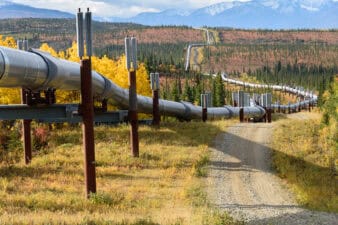
Source: Getty Images
About PEY
Peyto uses hedges, which are contracts that help lock in selling prices for part of its production. That can soften the damage from weak market prices. It can also limit the benefit when gas suddenly becomes more expensive, so there is a real trade-off behind the protection.
The benefit showed up in the second quarter, when Peyto recorded $36.7 million of realized hedging gains. Its price protection was doing something useful for the business while the unprotected market was less cooperative.
That makes Peyto more interesting to me than simply buying whichever gas producer displays the biggest yield. Income needs cash behind it, and contracts that support revenue can help provide that cash. Keeping production costs controlled is equally useful because every dollar saved leaves more available for other needs.
Payment besides earnings
Peyto generated $140.6 million of free funds flow in the second quarter, its measure of cash left after capital spending. Adjusted earnings were $0.50 a share. Three current monthly dividends total $0.36, about 72% of that is adjusted quarterly profit.
That isn’t an enormous cushion on an earnings basis, but it gives a concrete reason the payment can continue despite weak gas headlines. The cash measure also shows the company producing money after investing in its operations. Future spending and prices will determine how much room remains. Here’s what a $10,000 budget would produce at the current payment, before fees and taxes.
| COMPANY | RECENT PRICE | NUMBER OF SHARES | ANNUAL DIVIDEND | ANNUAL TOTAL PAYOUT | FREQUENCY | TOTAL INVESTMENT |
|---|---|---|---|---|---|---|
| PEY | $25.57 | 391 | $1.44 | $563.04 | Monthly | $9,997.87 |
The monthly payment would be $46.92, with $2.13 left in cash. It’s enough to cover a modest recurring expense, and reinvesting it would give a long-term shareholder more shares working towards future income.
At the same share price, one month’s payment would buy one additional whole share, with cash remaining. You don’t need the dividend to buy a large block at once for reinvestment to be worthwhile. Repeated small purchases increase the number of shares earning the next payment, though of course that share price can move up and down.
Realistic income
The important risk arrives as hedges expire and new prices replace them. A producer can’t protect all future revenue indefinitely. Higher drilling costs or weaker gas prices could eventually reduce the cash supporting the dividend.
That’s why I’d own Peyto as part of a mixed dividend portfolio, with steadier businesses alongside it. I like the yield and the company’s protection against short-term price weakness. I wouldn’t make an energy producer responsible for all of my essential monthly spending.
Bottom line
Peyto offers a compelling income opportunity for investors comfortable with the gas cycle. A Tax-Free Savings Account (TFSA) can shelter Canadian tax on suitable holdings when you have room, letting the payments support spending or buy additional shares. The appeal is understandable: earn monthly cash from a producer that has done some of the work of protecting its selling prices before the next weak market arrives.