A wind turbine can earn its first dollar years after shareholders put up theirs. In the meantime, the bank would still like its interest. That gap explains why two companies can sell exactly what electricity customers need and deliver wildly different results for investors. For someone choosing between renewable energy stocks, the interesting part is what happens after the blades start turning and how much of the electricity bill eventually lands in your account.
Source: Getty Images
BEP.UN
Brookfield Renewable Partners (TSX: BEP.UN) has more than one way to get paid. Its hydro, wind and solar facilities sell electricity, often under long contracts. It can also sell a stake in a completed project and keep an interest in the power it produces. A buyer gets an operating asset. Brookfield gets cash to start again without asking shareholders to finance the entire next project.
That approach translated into dividend raises. Canadian distributions were approximately $1.88 per unit in 2023 and $2.08 in 2025, about 5.2% annualized growth including currency movements. Full-year 2025 funds from operations per unit grew 10%. In the latest third quarter that metric, which strips out several accounting charges, rose another 11% year over year. The acquisitions of Boralex and Aypa further add generation and battery storage to the mix.
At writing, the distribution yields roughly 5.1% using the current exchange rate. Canadian payments vary with the dollar, and selling assets at attractive prices requires willing buyers. Yet shareholders already have operating cash and a record of raises to lean on while management works on its next sale.
NPI
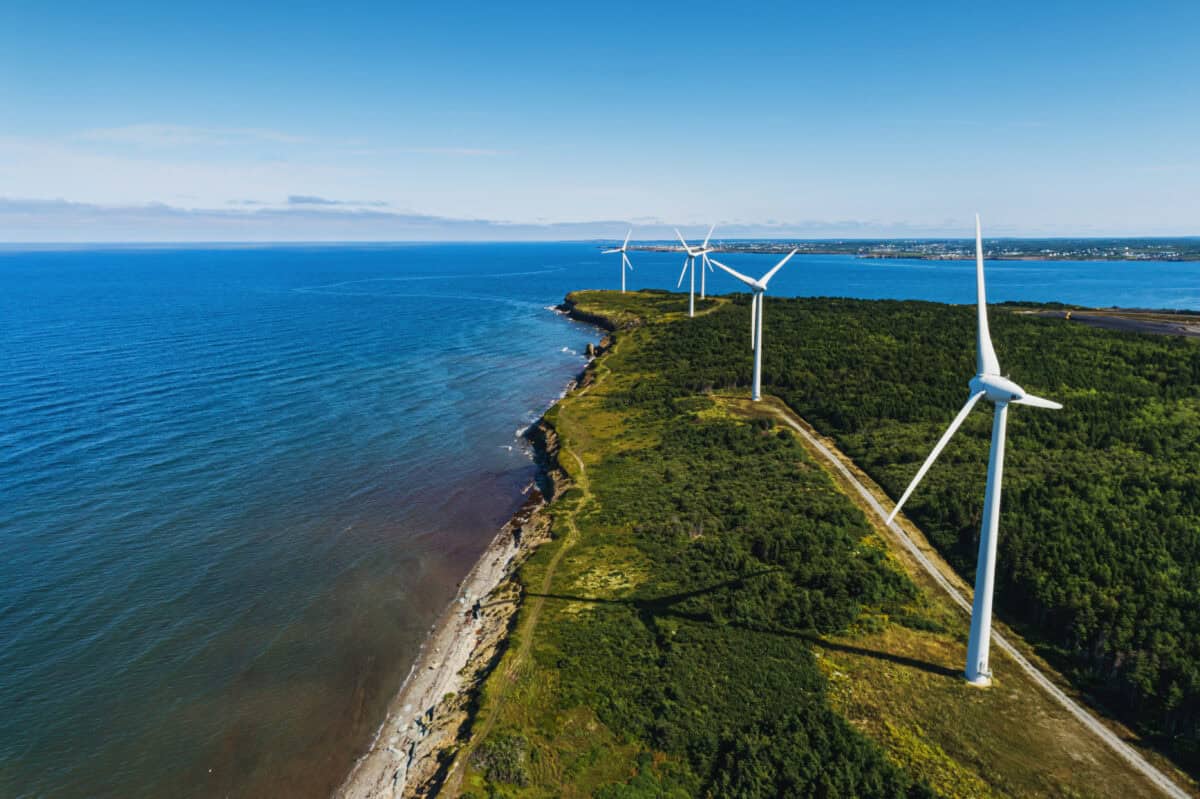
Northland Power (TSX: NPI) offers a more concentrated bet on offshore wind. All 73 turbines at Hai Long in Taiwan are generating power. At Baltic Power in Poland, all 76 were installed and more than 70% were generating at the latest update. Shareholders who spent years financing construction finally have something that can send customers a bill.
The waiting took a bite out of household income. Northland paid $1.20 annually per share in 2023 and 2024, then cut the annual rate to $0.72 heading into 2026. The projects helped lift quarterly adjusted operating earnings before interest, taxes and other charges by 9%. Yet management still expects only $1.05 to $1.25 of free cash flow per share this year, versus $1.46 in 2025. Debt payments can absorb some of the cash a wind farm brings in.
For a buyer choosing between dividend stocks, Brookfield currently pays more on the same $10,000. Keeping those payments invested also produced the stronger 10-year record. Here’s the income available and what repeating each historical growth rate over the last five years for one year would mean.
| COMPANY | RECENT PRICE | SHARES | ANNUAL DIVIDEND | ANNUAL PAYOUT | FREQUENCY | TOTAL INVESTMENT | CASH LEFT | HISTORICAL CAGR | ONE-YEAR GAIN | ENDING BALANCE |
|---|---|---|---|---|---|---|---|---|---|---|
| BEP.UN | $43.71 | 228 | $2.246317 | $512.16 | Quarterly | $9,965.88 | $34.12 | 14.35% | $1,430.10 | $11,430.10 |
| NPI | $24.00 | 416 | $0.72 | $299.52 | Monthly | $9,984.00 | $16.00 | 5.63% | $562.10 | $10,562.10 |
Bottom line
Brookfield offers the clearer path to rising income because the existing fleet can support shareholders while new projects mature. Northland has the more interesting turnaround milestone. A full year of offshore sales that lifts free cash flow per share would make a future dividend raise easier to defend. Until the cash starts showing up there, Brookfield earns the first investment.